I'd like to announce the publication of my first full-length poetry collection. Here's what some say:
Afterimage is an unsentimental but heartfelt elegy for the landscape and the people of the twentieth-century Midwest. The poems preserve the lost place, the lost time, and lost inhabitants, but Benjamin Vogt also celebrates the earth's own ability to flower and return, with human assistance and without. These firm and carefully measured poems are a thoughtful delight, one that should not be missed.
-- Andrew Hudgins
Benjamin Vogt's rich, transporting gift is to see deeply, generously considering moments and scenes that preceded and sustain the lives we know, to dig curiously and calmly, alert for clues and remnants--to harvest more than any seed promised.
-- Naomi Shihab Ny
Using family photographs from the last century, Afterimage moves
from the southern to northern Plains and the eastern Midwest, where the
natural world calls out through open fields and dark woods, then through
transient moments framed by gardens: a butterfly nectaring on a
coneflower, planting lavender with his future wife, or autumn leaves
crashing against a morning window. In a rich array of forms and
evocative imagery, the poems in Afterimage reach through prairie history until grass becomes skin, and light becomes shadow.
You can buy it on Amazon or straight from the press. Then, do let me know what you think, either on Amazon, Goodreads, email, or here. Please? I'll give you a prairie.
Thursday, January 24, 2013
Tuesday, January 15, 2013
Visiting Grandma -- From the Memoir
I nudged 60,000 words this morning. What I wrote today is below--a very fresh 2,000 words (ignore the tense shifts and other formatting errors) recounting two visits to my grandmother's nursing home in Oklahoma about a decade ago. This was hard to write, but I've vowed to post more new writing as I work on the book. I've included pictures along the way of my grandmother throughout her early life.
Entering the automatic sliding
double glass doors of the Corn Heritage Village retirement home is like
entering a grocery store that no one has been in for several years. I say this
because of the large doors, and then the stale, warm smell that breaks out into the
fresh air as if it were a breath held in. When you first step inside there’s a
sofa table against the wall straight ahead, with a centered painting or mirror above,
some dried flowers in a vase, maybe a chair or two. The hallway goes left to a
wing of rooms or right to the massive nurse’s desk, sitting area, and lunch
room. I am certain that I can smell coffee, eggs, spaghetti, chicken, cherry Jello,
coffee again – a conglomeration of meals from not just today but the last week.
The air is thick and heavy. The fluorescent lights sharp and white.
When you make it to the grand center
room flat with linoleum you know you are in death’s waiting room. Some folks
sit comatose in wheel chairs, others look up from knitting with both a hopeful
and resigned gaze, their eyes glassine and parched. A few are on a careful trajectory
with their walkers, fluorescent felt tennis balls cut open and placed over the
front two supports for easy gliding across the waxed floor. Straight ahead, in
the east wing behind closed swing doors, is the alzheimers and dementia ward.
Even with the doors shut you hear the screaming, the yells, the cries, the loud
mumbling. The north wing is where my grandma picked her room, the first one on
the right side that overlooked the parking area and front door so she could keep
an eye out for visitors.
![]() |
| Age 8, in the middle |
At the nursing home Dad has us all
wait outside the door, a bit down the hall—he wants to surprise his mom. So he
goes in first, and I hear him saying he’s brought someone with him, and I hear
her exclaim, “Oh?” Dad comes out and ushers us in like a traffic cop. There’s
my grandmother just inside and to the left of the door, sitting in her plush La-Z-Boy
rocker, lamp on the end table giving her face a yellow glow, and her smile, in
slow motion, growing wider than I’d ever seen it. My sisters and I take turns
bending down to hug her as she kisses us each on the cheek. My mom hugs her,
too, and we stand around the small room awkwardly until my dad fetches folding
chairs out of the closet, then balances himself on the edge of the elevated
hospital bed.
The TV is on TBN or home shopping. “Well,
Mom,” my Dad will begin, “How have you been?” or “Are you surprised to see your
grandkids?”
“Oh my, well yes,” she’ll say,
looking at each one of us in turn with longing eyes, still refocusing from
staring at the humming tv that Dad has muted with the remote control. “When did
you all get here?”
“Last night, Mom. We thought we’d
surprise you.” Grandma smiles, asks if we want something to drink, which there’s
no way in the world we do. My youngest sister is about 13, and leans forward in
her chair already bored—living in Minnesota, she never knew grandma like her
older sister and I did. She’s maybe still wearing a baseball cap, I can’t
remember when she quit, but Grandma always gave her a hard time about that,
asking if she wasn’t worried people would think she was a boy. I imagine she
had similar conversations with my other sister.
“I’m so surprised. I’m so happy to
see you all. It’s been so long, I think.” She’ll pause look at the clock then
my dad, “How long has it been?”
| Age 14 |
| Age 17 |
I’m not sure what we talked about,
but I’m sure it was a potpourri of school, work, the trip, how long we’ll stay,
where are we staying—she doesn’t at all seem concerned we’re staying in her
house, maybe it’s a relief to know that someone is using it, giving it life
again if even for a time. But that house is so empty. I want to tell her how
her house feels like a museum after hours, how it seems to echo constantly with
some subsonic pulse, how it’s nothing without her. I want to say how the house
smells richer than I ever remember, like it’s grown finer and denser without
anyone living in it, like some aged wine or cheese. It penetrates me deeply. It's hard to sleep there.
Whatever we say, it’s often
interrupted by the speakers in the hallway announcing a page for a nurse or
doctor. After twenty minutes most of us are bored and weighted down by the
place, a hotel and a hospital, each room with an open door like a zoo exhibit,
a spider web or venus fly trap. I look out the doorway into the hall to extend
my view—grandma’s room has a warmer light since she just has lamps on, in the
hallway it’s a purple white. Slowly, a rocker appears in the frame from the
left—the tennis balls like headlights, the shiny metal legs, the rubber
handles, shuffling feet in black slippers, then half a woman hunched over with
a plastic hair net over a perm she maybe just received. She’ll look in, likely drawn
by the energy, the electric sense of more bodies humming like some cosmic
string imperceptible to the naked eye. The woman will pause in the middle of
the doorway, still looking in.
“Mrs. Schmidt,” my Grandma might
say, “This is my son and his family from Minnesota. They’ve come to visit me.”
And then Mrs. Schmidt or whoever she is might say, “Oh, how nice” and linger as
if she wants to stay, or move on, seemingly unsure if we are real or not. This
event happens enough times that I came to know many a Mrs. Schmidt, some more
energetic and able-bodied than others, some more indifferent and some that
overstayed their welcome.
![]() |
| Age 20, a few days after her wedding |
“Do you have any plans for today,”
Grandma asks my dad.
“Not yet,” he begins, and maybe Mom
looks over and he quickly recovers, “but I think we’ll go have lunch and then
visit with Gaylon.” That really was the extent of the area’s attractions,
besides taking my little sister to the park her older siblings once played in.
We wouldn’t go to the homeplace, at the time not even a location I was entirely
sure of or even remembered having visited long ago. I think we’d mostly eat,
watch tv, pass the few days as well as we could as if holding our breath. “Can
I bring you anything, Mom? Is there anything I can get from town?” We all know
he’ll bring her some tacos from a restaurant or a chocolate shake from Brahm’s,
whatever little thing he can that’s different and from out there. It’s the
least that can be done.
“Oh, I don’t know what I’d want.”
And as I see her thinking I know her mind is still sharp; she is not old, she
is only 81. She could keep up with us no problem if her heart surgery hadn’t
been botched, if the nearly guaranteed bypass had worked as the doctors said it
would and how it did for countless others. Instead, she sits in a downy rocker
all day long, keeping still, shifting her crossed ankles one over the other
than back one over the other. Her perm is flat in the back from leaning against
the cushion. Her phone and water glass are within reach, the remote, some
magazines, a checkbook, a pen. Out the window is the front door, a bevy of
coming and going (a few people every hour). Maybe I remember a hummingbird feeder
someone put outside for her, hanging from the eave, but no one ever fills it. I
remember the red feeders she had out her back porch in Weatherford, the
honeysuckles, the magnets and plates and bookends and photos and spoons and
glasses and statues.
Today I was 26 and I was 10—I could
not wait to get out of there. I hated myself for it. I still do. I think my dad lives
with a searing guilt of not visiting her more often. It was never a matter of
money, or even of time—he didn’t want to go alone, he didn’t want to see his
mom like that, maybe he didn’t want to be reminded of what he left and of who
he was—not for bad things, but good, a life he surely romanticizes because, in
part, everyone was younger and closer. When he was a boy there was still the
tradition of visiting people during the week and on Sundays—you loaded up the
family in the 1954 Bel Air and saw aunts and uncles, cousins, grandparents. You
ate well, you shared stories, you knew others and where you were and who you
were by the sound of another’s voice and the presence of their body. Without
that nearness you were far away from everything, maybe existence itself, a
planet on the outer edge of the solar system looking in from the darkness of
infinity.
And maybe that’s how my Dad saw his
Mom and himself, maybe that’s all how we saw ourselves here in the nursing home—celestial
bodies so far apart and unable to effect each other’s orbit in meaningful ways
anymore, except for the times when our elliptical paths got close, say, every
5-10 years; when Dad gathered us all for a trip to Oklahoma.
![]() |
| Age 33, with my dad in front of a Chevy Bel Air |
On another trip, the last one
before she passed away three years later, I had brought the bundle of pictures I’d
scavenged from her daughter in laws after cleaning out her house. I’d selected a
manageable dozen or so that intrigued me the most—I didn’t know who anyone was
or where they were. I had a suspicion that, in a few years, maybe longer, I’d
want to know, maybe write about them. It was the first time I ever showed a
genuine interest in my family there, that I really wanted to learn from my
grandmother.
So I pulled up one of the black
chairs that had been at the kitchen table in her house, and rested my left
elbow on a cushion of her rocker as I handed her one image at a time. I don’t
remember what she said. I didn’t write anything down. I should have, I’d
intended to, but suddenly that didn’t seem the point. In that half hour or hour
where I slid her photos and she held them in her now boney, shaking hand, it
was her voice I wanted, the smell of her perfume she still wore, defiant to her
condition and the colostomy bag.
Oh how she lit up like someone pricked
her with a pin. She remembered every face, every location, retelling the
circumstances around the image—a boy being pulled on a sled through the street,
a man hanging on a metal clothesline, an upside down truck in a field, a photo
of her by a waterfall. Her breath, the perfume, the warm light of the lamp, the
cushion of the chair, the loud beeping of some resident’s room calling for a
nurse—it was all somehow a raw sweetness, a terrible love, an ocean of memories
crashing on a deserted island’s shore.
When she was done she’d linger then hand
me the photo, fold her hands, seeming to catch her breath. Soon she’d say, “Do
you have another one,” as if each were a rich candy to be savored and overcome,
her stomach full but the echo of the last piece so strong she wanted another
and another. So I hand her a picture, she pinching a corner on the left, me a
corner on the right. We hold the small 3x5” image, both of our hearts rippling
through our arms and hands out into the black and white middle where we found
who we were together.
Saturday, January 12, 2013
Four Things That Stirred My Blood This Week
1) Don't medicate your kids -- get them outside. It's free and has no side effects. A new study says "chronic nature exposure" (ha) can ease and heal ADHD and other disorders and imbalances. Strange how, as our society has started spending more time inside, mental and physical health issues have increased. Could it be we are part of this planet? Why do we deny that connection? Why do we work so hard to deny our nature? why do we seek or accept imbalance?
2) As much as half of global food is wasted in production, transit, or storage. So next time you're debating the merits of new cropland as it destroys native habitats, or the gmo / chemical / super weed conundrum that is food production, mention this article. Folks, food production is about profit -- "feeding the world" is an illusion. Teach a man to fish. Teach his wife and kids, too -- then Monsanto will be outta business, or will simply need to hire more lobbyists and purchase more politicians.
3) There's less and less hope for native stands of anything to be able to replenish themselves if given the opportunity. This piece discusses how invading nonnatives have and will rule the day -- partly because there's so little native plants left, and partly because by their very nature non-natives are invasive (not aggressive, but invasive, since some native plants can and should be aggressive).
4) Chris Helzer lists the effects of grazing / burning of prairie restorations over a decade, with observations along the way like this one: "Butterflies are nectaring primarily on ”weedy” wildflower species in our prairies. Again, I’ve dealt with this in a previous post. Essentially, regal fritillaries and most other butterfly species in our prairies are primarily nectaring on hoary vervain (Verbena stricta), thistles (Carduus nutans and various Cirsium species), and milkweeds (Asclepias species) – which are considered to be weeds by many people. Those “weeds” appear to be awfully important to butterflies and other pollinators."
2) As much as half of global food is wasted in production, transit, or storage. So next time you're debating the merits of new cropland as it destroys native habitats, or the gmo / chemical / super weed conundrum that is food production, mention this article. Folks, food production is about profit -- "feeding the world" is an illusion. Teach a man to fish. Teach his wife and kids, too -- then Monsanto will be outta business, or will simply need to hire more lobbyists and purchase more politicians.
3) There's less and less hope for native stands of anything to be able to replenish themselves if given the opportunity. This piece discusses how invading nonnatives have and will rule the day -- partly because there's so little native plants left, and partly because by their very nature non-natives are invasive (not aggressive, but invasive, since some native plants can and should be aggressive).
4) Chris Helzer lists the effects of grazing / burning of prairie restorations over a decade, with observations along the way like this one: "Butterflies are nectaring primarily on ”weedy” wildflower species in our prairies. Again, I’ve dealt with this in a previous post. Essentially, regal fritillaries and most other butterfly species in our prairies are primarily nectaring on hoary vervain (Verbena stricta), thistles (Carduus nutans and various Cirsium species), and milkweeds (Asclepias species) – which are considered to be weeds by many people. Those “weeds” appear to be awfully important to butterflies and other pollinators."
Sunday, January 6, 2013
Hot Off the Press
Over the last few days I've been trying to write an essay on the history of my family's 1894 / 1903 farmhouse in Oklahoma. I have a sprawling, disjointed, unedited 5,000 words to add to the 40,000 I've worked on the last six months. I hope to hit 80,000 or 90,000 words by February and have a complete draft to work with. Finally. Here's that newborn sample--tell me what you think if you're so inclined:
Let’s say my great grandfather,
John, is fourteen years old. But he could also be six or seven. He and his father
Abraham are a half day northeast of their homestead. The sun rose a while ago.
They’d gotten up well before sunrise to load the wagon with wheat, and John is
now dozing, lying flat across the harvest they are carrying to El Reno to sell.
The wagon slows and Abraham turns
his head a little and says, “John, John wake up. We’re at the Canadian.” My
great grandfather might say “so what” or he might say nothing, trying to stay
half conscious as long as possible on the bed of warm, soft wheat seed,
imagining what a beach on the ocean must feel like—how a wheat field is so much
like an ocean he’d never see. “John!” Abraham would yell a bit louder, and my
great grandfather would sit up on his knees, try to get his feet under him only
to have one leg slide out and sink into the seed.
They’d picked this day to travel
because it had been over a week since it rained, so the likelihood of the
Canadian being full and swift was small. John would manage to get on to the
bench seat next to his dad, removing a shoe and dumping the seed into the back.
“Pay attention now,” Abraham would say, “Help me look out for pits or
boulders.” They looked at each other, then both to the side and straight ahead
as Abraham nudged the team from the shoreline into the cold stream, shallow but
moving well to the southeast. Plenty of people drowned in the Canadian. It
didn’t take much to get stuck, to tip over, to get caught in the current after
picking the wrong crossing or time of week. It wasn’t deep, but it didn’t
matter. Water has a way of lifting you out of this world before you knew what
happened.
It took four full days to get to
El Reno and return to Corn. In about 1903 or 1895 (dates are as elusive as
frogs) my great grandfather and his father must’ve made the trip several times
in summer, selling their wheat harvest one wagon load at a time, then returning
with freshly-milled wood to build their first house on the homestead.
John was born in May of 1889,
perhaps near Inman or Marion, Kansas, while his parents were most likely
renting farms in the area, switching from place to place, trying to find the
lowest rates and save enough money for a farm of their own. John’s mother, Elizabeth,
had three sons from a previous marriage to Peter Kliewer, who died of fever in
1881 a few weeks before their three month old daughter. John’s parents married
on 12/12/1883 and in 1894 they left for Oklahoma, to a place near the Washita
River—likely an inexpensive indian plot now ready for sale after allotment had
run its course. But this is only a guess. It may be that no one wanted a
quarter section of land two miles from the river, even though Gyp Creek ran on
the southeastern edge of the property. Then again, the creek’s water was likely
too muddy, too gypy, to be potable, so no one might want the land. But this is
also only a guess. Maybe Abraham had come down during the Cheyenne / Arapaho
land run and made a claim, living on the land alone for some time to claim
resident status, then returning home to Kansas to make more money and gather
his family. Maybe.
In 1894 Elizabeth and John had 7
kids--3 were Kliewer, 4 were Janzen--and they’d already lost a four month old
daughter in June of 1888. They lived in a one room dugout for nearly ten years
(or one year), in one winter sheltering a calf inside with them. Likely, they
sheltered more than a calf during those years—maybe chickens, hogs,
sheep. The dugout was one of many pillbox homesteads dotting quarter sections
in western Oklahoma, strong out like lily pads across a pond. Most were built
half into the ground, with walls and a roof made of unzipped prairie sod blocks.
The ceiling would have a canvas tarp strung up to catch dripping rainfall, and
the beds would be shaken out each night for dust, mice, and snakes. Maybe
John’s family could afford a glass window or two to let in some light. Maybe
they used glass jars.
One person built the frame house
on the northern edge of the homestead, but no one remembers who or how long it
took to build. Surely Elizabeth rejoiced when they tore down the soddy and
smoothed out the land to farm--they’d started to make their way in the new
country a quarter century after arriving, even though they didn’t yet speak the
language very well.
In 1920 Abraham and Elizabeth moved to California to
be near her son Jake Kliewer. They stayed for four years, and the farmhouse
stood empty for a few months, a few years, or all four years. John had been
living across the Washita near Bear Creek on an Indian lease. He met Katherina
/ Katherine / Katie Peters—probably at Bergthal church—who had immigrated with
her parents and grandparents DeFehr from Russia when she was nine, landing in Galveston,
Texas instead of New York which was under a quarantine. She left a
crippled sister in Russia, Lena, who decades later would write that communism
would someday come to Oklahoma, too, and this frightened the family time and again.
John and Katie married 9/15/1912,
living in his small bachelor pad and having four kids before they bought his
parent’s homestead in the early 1920s. My grandmother, Mildred, was the first
child born in this house, and in a way, I think that always gave her a stronger
sense of kinship and honor, a sort of custodian of the history tied up in that
place. And yet I have very little understanding of the dozens of lives that are
entwined in the now gone wooden boards, brick fireplaces, stock tanks, and well.
Like anyone living nearly a hundred years after my grandmother’s birth, I have a few pieces of an image only—and what’s empty in between can
be made up or circumvented in favor of what’s left. I could completely make up stories. I
could pretend my way through a life I can’t possibly imagine with any ounce of
credibility. Or I can try to find my way through what I do have—connect the
dots, hop from one stone to another across a moving river that erodes and carries
away the farm field sediment. I think my grandmother fought against such erosion in her own
way, and somehow, taught me to fight against it in mine.
Geography is one part physicality
and one part experience, with a dash of distorted memory. I’m living without
the last two, and only one part of the first; I’m not exactly sure where the
farmhouse was. I know that the house was near the barn—pictures tell me this. I
know where the second barn is—its leaning façade tells me this. I assume that
when a tornado took the original barn in 1940 they built the new one in the
same exact place. Looking at a satellite image, and remembering a water line I
stumbled on, I am confident all of the structures were on the north central
portion of the quarter section. I can see from above the drainage of the land,
and in one image from one website taken at a different season or year, I think
I can see the faint square outline of a structure like some faded Nazca line.
The house was burned in the 1990s when cattle fell in the cellar and died, then
filled in and farmed over. I think the house was just northeast of the barn and
windmill. One of my greatest hopes is to hire archeological students from the
local college and go digging—but maybe renting a metal detector would be
enough. Not knowing for certain where the house was makes my entire story, my
ancestor’s lives, even more floaty and mercurial.
But I do have my grandmother’s
words, written down in a memory book she kept later in life. I wonder who she
assumed would read it, if anyone would. Who was she writing for—anyone
specific? Was it just some faint hope, was it an exercise in nostalgia, was it
an attempt to leave something tangible from a sprawling life so deeply lived in
one place? Then I have her sisters’ words—three who are still alive. Listen.
The big bedroom on the second
floor looked south over the windmill, watering tank, and barn. The upstairs was
never finished on the inside, and the hollow walls went all the way down to the
ground, which meant snakes like flatheads and copperheads crawled their way to
the top floor. On the east side of the
house was the kitchen, which had a covered walkway leading to the summer
kitchen—a small, one-room out building to do the cooking so the house would not
get as hot in summer. On the west end were the bedrooms on the first and second floors—perhaps as few as four, maybe as many as 6 or 7. In the living room was
a sofa, some chairs, and a piano that Grandma wished she could play, but could
never afford the lessons. I imagine her sitting on a nearby chair, wistfully
eyeing the fine piece of furniture—a symbol of upward mobility. Perhaps when
she was in town with her father, John, they heard a tune on the radio, and when
they got home he’d sit at the piano and play the song by ear without missing a
beat. How grandma must have enjoyed that, jealous of his talent that could be
performed as easily on a harmonica or guitar. When he was younger John played
in a band at barn dances. During a rain when they were all stuck inside, they’d
sit by an opened south window looking out over the fields, smelling the clean
air, and John would cradle the guitar across his lap. Maybe he leaned back and
spread his legs like musicians do, or maybe he leaned over his instrument like
peeking over a fence, whispering words to his kids. Maybe they sang some hymns
or german folk tunes. Surely they sat there for a while, happy for the rest and
the coolness, the percussion of the rain with the acoustic twang of the guitar
strings echoing off the plaster walls.
Sunday, December 30, 2012
2012 Garden Picture Redux
I know that no one else is doing some sort of retrospective, so you can't possibly be sick of this shtick. Fiscal cliff. Mayan apocalypse. (Link on over for last year's garden review.)
This year I gave several presentations on native prairie plants, started a garden coaching business, my garden was featured online at Fine Gardening and in the Omaha World Herald, people called me for interviews about gardening (still floored by this), and I started writing a Great Plains gardening column for Houzz. I've also agreed to be on the board of the local Audubon chapter, Wachiska, which works to preserve prairie remnants.
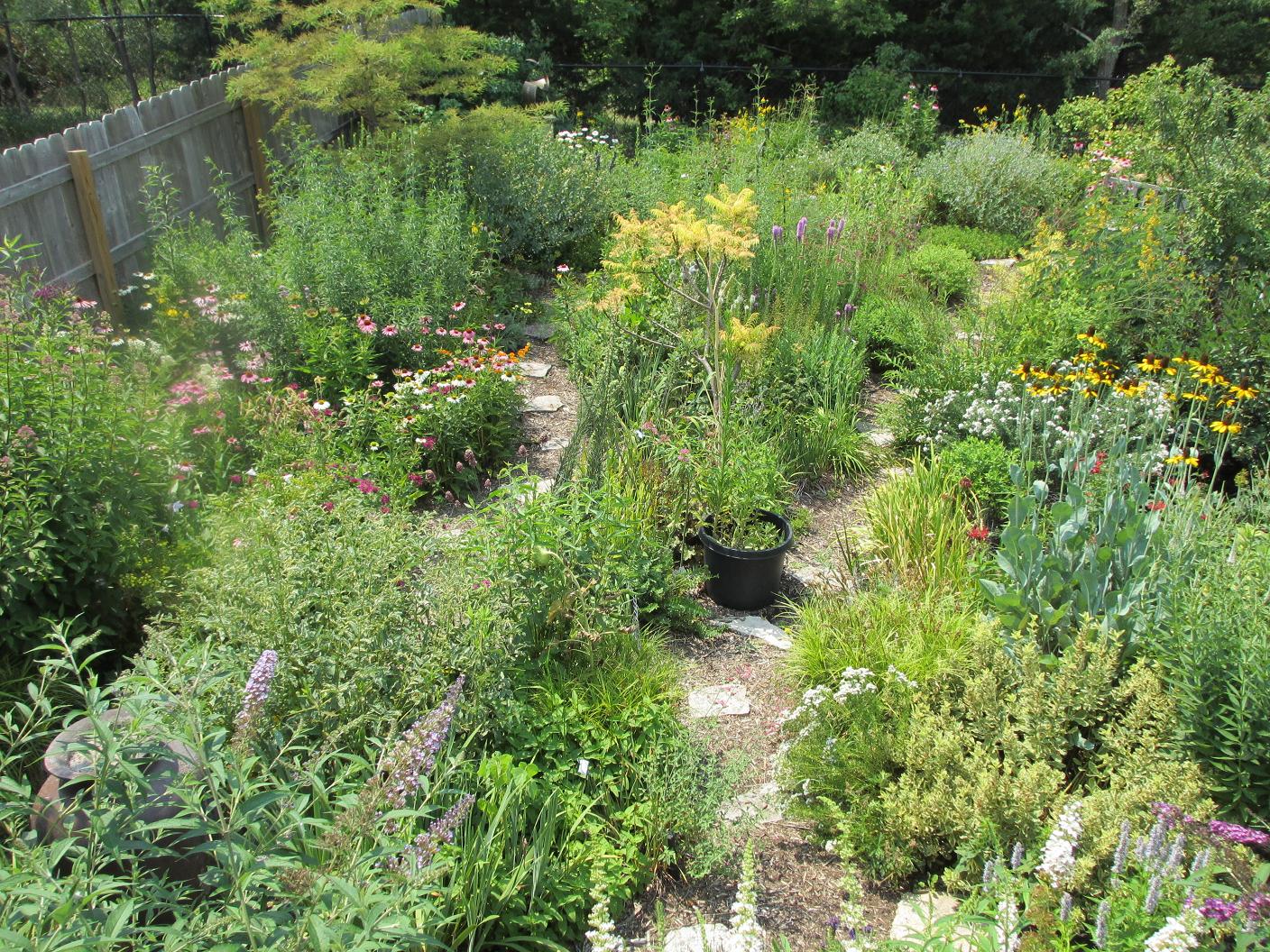
So, without further obvious navel gazing, here are over 30 images from my gardening year.
So my goal / hopes for this year are trimmed down, yet still quite massive:
1) Finish a solid first draft of the Oklahoma memoir (hopefully in January!), then a final draft by summer.
2) Find a press for Gardening Wild: How to Grow Sustainably for Butterflies, Bees, Birds, and More
3) Find a more secure job with benefits. Teaching would be most fine.
4) Move to an acreage if #2 pans out. Begin prairie restoration. Begin plant raising to sell at farmer's markets. Build artist sheds for residencies on acreage.
5) Begin writing two experimental nonfiction books and one children's book.
6) Watch my wife get her PhD. And maybe we'll both get jobs (here's our joint job ad).
This year I gave several presentations on native prairie plants, started a garden coaching business, my garden was featured online at Fine Gardening and in the Omaha World Herald, people called me for interviews about gardening (still floored by this), and I started writing a Great Plains gardening column for Houzz. I've also agreed to be on the board of the local Audubon chapter, Wachiska, which works to preserve prairie remnants.
So, without further obvious navel gazing, here are over 30 images from my gardening year.
| We had one really good snowfall in early February, then it was big time drought. |
| Mice nested in our dryer vent line in January. This keeps them out. I still can smell the pee. |
| A small sharp-shinned hawk eventually nabbed a junco for lunch. |
| No spring is complete without a trip to see the oldest bird on the planet -- sandhill cranes in Nebraska. |
| March -- when it hit 90 several times and I was always behind schedule. |
| Spring -- when I spent much time in the mechanic's shop fuming over this sign. I dared not drink the coffee. |
![]() |
| Pasque flower is my first bloomer. |
| Started a garden coaching biz, sold some plants and books, broke even. |
| Two robins hatched then died (did not drown). A nest in a new spot worked out. |
| I trapped two rabbits and this opossum, all gorging on my new veg garden. |
| Bed was too small, temps were too high. First year with veg was a flop. |
![]() |
| Something was enjoying peony buds last May. |
| Nothing is cooler than seeing your name on a sign! I gave several talks this year in NE & KS. |
| I'm into buds more than blooms these days -- here's Amsonia hubrichtii. |
![]() |
| Visited the 1894 OK homestead for a 3rd time. Writing the memoir. It's hard. As it should be. |
| Very few insects this year, so the mantis got lucky -- the wasp did not. |
![]() |
| Our 5 year anniversary was in July. Time flies. |
| The garden in July. Lost many coneflowers to aster yellows. |
| Tamer and master of monarchs! |
| Can you see my reflection in the fly? |
| Found a dead snake in the lawn. It smelled awful. |
| My thinking bench surrounded by indian grass. |
| Usually we raise 100-200 monarchs. Only about 24 this year. |
| Spent sunflowers at sunset. |
| One of the few days we let them out. Warm into November. |
![]() |
| Come into the fall garden -- the color is fine. |
| My buddy keeps me company as I write. |
| Still amazed this happened a few weeks back. Honored by the life in this 1500' garden. |
And here's the garden timelapse from July 2011 to November 2012
![]() |
| My first poetry collection is due out any day -- I have author's copies in my hands |
So my goal / hopes for this year are trimmed down, yet still quite massive:
1) Finish a solid first draft of the Oklahoma memoir (hopefully in January!), then a final draft by summer.
2) Find a press for Gardening Wild: How to Grow Sustainably for Butterflies, Bees, Birds, and More
3) Find a more secure job with benefits. Teaching would be most fine.
4) Move to an acreage if #2 pans out. Begin prairie restoration. Begin plant raising to sell at farmer's markets. Build artist sheds for residencies on acreage.
5) Begin writing two experimental nonfiction books and one children's book.
6) Watch my wife get her PhD. And maybe we'll both get jobs (here's our joint job ad).
Friday, December 21, 2012
A Blizzard of Birds
The forecasted 6-10" never happened, just about 4" or so. But we finally stopped our record of days between snows at 305 or 310ish. After the "storm" we had dozens of birds -- folks, this is why you leave the garden up in winter and provide a source of water (and food if you want to maintain the feeders). Tons of birds dashing in and out of bent indian grass and joe pye stalks, hopping over drifts, diving from tree to tree.
| First the robin came to drink melting snow. Then a bluebird. Then another. |
| Starlings jockey for the small hole a 60 watt heater makes. |
| The water brings in every kind of bird. A robin even dunked its head all the way in. |
| I want to be a bird for just ten minutes. As long as a sharp-shinned hawk doesn't get me. |
| Go snow. Stratify those prairie seeds in the 20 pots of soil. Nice insulation for 0 degree low, too. |
| Merry Christmas. Here's our tree. |
Saturday, December 15, 2012
Landscapes of Little Meaning
Every day I walk past the newly-expanded power plant at the University of Nebraska. After the sidewalk and street were torn up, the landscape needed mending. Although I'd have to say UNL's landscape is more progressive than most--including scattered beds with modest native plantings and sculpture--they too often succumb to the same old boring, outdated 19th century English blind lunacy of American landscape design.
This new sod--not even drought-tolerant buffalo grass--is wasted space. Every day thousands of people walk by and get nothing. No connection to place, environment, or nature. If anything, a power plant needs a good disguise, which means a nice little short grass prairie. No one will ever use this lawn, but it will be watered, fertilized, and mowed religiously, wasting resources, polluting the environment, et cetera. Plant it in a mix of wildflowers and grass and you only have to tend to it once a year for about ten minutes.
What the lawn says is that we value conformity and a lack of imagination or creativity. What the lawn says is that nature does not exist. What the lawn says is that freedom is a myth and self-determination is a pipe dream.
I can't tell you how many times I have a student read a "nature" poem or essay and they can't connect--they have no shared language, no genuine context. It's been beaten out of them. Their idea--our idea--of nature is a farm pond, corn fields, trees in a park, or just opening the door. It's not more than a human-made backdrop. When we go outside to write they seem genuinely uncomfortable. I think most of us do. But once they begin to let go the floodgates open--human thought and emotion intertwine with whatever nature is available at the moment and good writing blossoms. We have nature deficit disorder.
If the lawn in front of the power plant at UNL was 200 square feet of sweet-smelling prairie forbs alive with songbirds and butterflies, I think that would rub off on passing students--something would stick and switch in them the whole day; all of their perceptions, their whole approach to life would subtly change for the better. They'd be more creative and open. They'd feel more alive, connected, and like they belong. I can tell you, that sense of belonging is what's most at stake (especially for freshman), and why we so often resort to direct and indirect violence. Without genuine experience with nature we are lost.
This new sod--not even drought-tolerant buffalo grass--is wasted space. Every day thousands of people walk by and get nothing. No connection to place, environment, or nature. If anything, a power plant needs a good disguise, which means a nice little short grass prairie. No one will ever use this lawn, but it will be watered, fertilized, and mowed religiously, wasting resources, polluting the environment, et cetera. Plant it in a mix of wildflowers and grass and you only have to tend to it once a year for about ten minutes.
What the lawn says is that we value conformity and a lack of imagination or creativity. What the lawn says is that nature does not exist. What the lawn says is that freedom is a myth and self-determination is a pipe dream.
I can't tell you how many times I have a student read a "nature" poem or essay and they can't connect--they have no shared language, no genuine context. It's been beaten out of them. Their idea--our idea--of nature is a farm pond, corn fields, trees in a park, or just opening the door. It's not more than a human-made backdrop. When we go outside to write they seem genuinely uncomfortable. I think most of us do. But once they begin to let go the floodgates open--human thought and emotion intertwine with whatever nature is available at the moment and good writing blossoms. We have nature deficit disorder.
If the lawn in front of the power plant at UNL was 200 square feet of sweet-smelling prairie forbs alive with songbirds and butterflies, I think that would rub off on passing students--something would stick and switch in them the whole day; all of their perceptions, their whole approach to life would subtly change for the better. They'd be more creative and open. They'd feel more alive, connected, and like they belong. I can tell you, that sense of belonging is what's most at stake (especially for freshman), and why we so often resort to direct and indirect violence. Without genuine experience with nature we are lost.
Monday, December 10, 2012
Job Ad For My Wife and Me
Benjamin Vogt and Jaclyn Cruikshank Vogt invite applications from colleges
for two tenure-track assistant professor positions: one in creative writing
(poetry & nonfiction), Native American literature, and environmental
literature; the other in twentieth-century American literature specializing in women's
and gender studies, ethnic literature, and with an interest in digital
humanities. Both have taught a full array of courses and have a PhD in their
field with a collection of books, journal publications, conference
presentations, departmental service, teaching awards, fellowships, and
scholarships, along with employment in marketing, journalism, editing, writing
centers, and esl tutoring.
Successful colleges will be in the upper Midwest, rural or semi urban, diverse, flexible, creative, and academically rigorous while encouraging multiple perspectives, thinking outside the box, and offering interdisciplinary courses. Preferred qualifications include an integrated study abroad program, collegial faculty, an innovative benefits package, and an ecologically-progressive campus. Colleges may apply by emailing bervogtATgmail.com and attaching a letter of application with department philosophy and mission statement. If interested, we will proceed by sending you more information, including vita and teaching portfolios. Applications will be accepted until positions are filled. The Vogts are equal opportunity employees, encouraging applications from diverse candidates.
Thursday, December 6, 2012
Healing Monarchs Heals Us
Ran across this article. Says a lot we already know, but has new tidbits, too. Besides, can't harp on this enough. Reminds of the Bible quote that goes something like "what you do the least of these you do to me." It says a lot that we don't have to live like we do, but we choose to. No wonder we kill each other, have kids born as meth addicts, can't trust a government to get things done amicably and for the greater good when we're too blind by our own immediate concerns.
“Monarch butterflies warn of what might lie ahead for other wild creatures affected by overfarming and deforestation,” says Chip Taylor, professor of insect ecology at the University of Kansas in Lawrence, who founded Monarch Watch in 1992.
“It’s clear that this year’s total population is down, and that the overwintering group that just arrived in Mexico is among the lowest ever recorded.”
The devastating reduction started 15 years ago—very recently in the monarch’s long history. An estimated 250,000 years old, this species predates modern humans by 50,000 years....
In March, a University of Minnesota study linked 10 years of monarch decline to glyphosate, the most popular herbicide in the United States, used in brands such as Monsanto’s Roundup. An estimated 84,000 tons of glyphosate are applied annually to soybeans, corn and other U.S. commercial crops. On top of this comes 3,600 tons used in the home and garden sectors, and 6,800 tons used by private businesses and government agencies.
Though glyphosate may be a boon to farmers and landscapers, it is killing milkweed—normally among the hardiest and most stubborn of plants—in record numbers. One recent study found that the milkweed population in the Midwest plunged 58 percent from 1999 to 2010, and that as a result, monarch egg production plummeted 81 percent.
“Monarch butterflies warn of what might lie ahead for other wild creatures affected by overfarming and deforestation,” says Chip Taylor, professor of insect ecology at the University of Kansas in Lawrence, who founded Monarch Watch in 1992.
“It’s clear that this year’s total population is down, and that the overwintering group that just arrived in Mexico is among the lowest ever recorded.”
The devastating reduction started 15 years ago—very recently in the monarch’s long history. An estimated 250,000 years old, this species predates modern humans by 50,000 years....
In March, a University of Minnesota study linked 10 years of monarch decline to glyphosate, the most popular herbicide in the United States, used in brands such as Monsanto’s Roundup. An estimated 84,000 tons of glyphosate are applied annually to soybeans, corn and other U.S. commercial crops. On top of this comes 3,600 tons used in the home and garden sectors, and 6,800 tons used by private businesses and government agencies.
Though glyphosate may be a boon to farmers and landscapers, it is killing milkweed—normally among the hardiest and most stubborn of plants—in record numbers. One recent study found that the milkweed population in the Midwest plunged 58 percent from 1999 to 2010, and that as a result, monarch egg production plummeted 81 percent.
Subscribe to:
Posts (Atom)