I'm intrigued to pick up his new book, Whole Earth Discipline: An Ecopragmitist Manifesto. In this video, Brand says squatter and shanty towns in developing nations are good things for saving the planet. Poor farmers leave the country, the country recovers. These farmers in the city create jobs and have fewer kids, since kids in the city (vs. the country) or not as beneficial, so world population will climax at 8 billion in 2050 then drop sharply. Maybe this is true--it's an inteesting take on something I think we most think of as a bad phenomenon. I'll have to read more so I can speak better on it, though. He also is a proponent of geneticlly modified plants that can produce more food per acre, thus taking up less room and allowing for more nature (ha), and plants that are no longer annuals but perennials, thus being no till (which means less carbon released into the air, and less topsoil blown away).
Friday, October 30, 2009


Wednesday, October 28, 2009
Poet Costumes / Poet Graves / Vampire Poems
Ah Halloween. You can wear a Benjamin Vogt costume, or go as Dickinson, Poe, Williams, Whitman, or Sapho. Link here.
As a gardener, I like Whitman for the butterfly beard and grass stains....
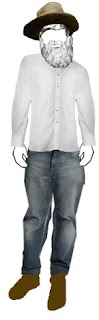
You Will Need:
A beard
A simple collared shirt
Rustic pants
A floppy brown hat
Extra Credit
Hide butteflies in your beard
(In "Ode to Walt Whitman," Federico García Lorca wrote: "Not for a moment, Walt Whitman, lovely old man, / have I failed to see your beard full of butterflies")
Roll in the grass to complete the look: when someone asks what that is stuck to your shirt, you can reply as Whitman does in "A child said, What is the grass?"
And why not spend the weekend visiting a poet's grave near you?
The Vampire Bride
by Henry Thomas Liddell
"I am come—I am come! once again from the tomb,
In return for the ring which you gave;
That I am thine, and that thou art mine,
This nuptial pledge receive."
He lay like a corse 'neath the Demon's force,
And she wrapp'd him in a shround;
And she fixed her teeth his heart beneath,
And she drank of the warm life-blood!
And ever and anon murmur'd the lips of stone,
"Soft and warm is this couch of thine,
Thou'lt to-morrow be laid on a colder bed—
Albert! that bed will be mine!"
More?
As a gardener, I like Whitman for the butterfly beard and grass stains....

You Will Need:
A beard
A simple collared shirt
Rustic pants
A floppy brown hat
Extra Credit
Hide butteflies in your beard
(In "Ode to Walt Whitman," Federico García Lorca wrote: "Not for a moment, Walt Whitman, lovely old man, / have I failed to see your beard full of butterflies")
Roll in the grass to complete the look: when someone asks what that is stuck to your shirt, you can reply as Whitman does in "A child said, What is the grass?"
And why not spend the weekend visiting a poet's grave near you?
The Vampire Bride
by Henry Thomas Liddell
"I am come—I am come! once again from the tomb,
In return for the ring which you gave;
That I am thine, and that thou art mine,
This nuptial pledge receive."
He lay like a corse 'neath the Demon's force,
And she wrapp'd him in a shround;
And she fixed her teeth his heart beneath,
And she drank of the warm life-blood!
And ever and anon murmur'd the lips of stone,
"Soft and warm is this couch of thine,
Thou'lt to-morrow be laid on a colder bed—
Albert! that bed will be mine!"
More?
Friday, October 23, 2009
We've Got Color, Yes We Do
17 pics of the 2 year old fall garden. Though there are still many open spots on two sides, those will vanish next year. I'm happy with the color I'm seeing this fall--which is partly due to plants maturing, and partly due to the fact I picked some good specimans. I love myself. Sooooo much. (But let's not talk about the front garden, ok? I hate myself.)
I'm not going to show you maples (bright red) or willows (bright yellow). In fact, we need to praise the perennials and shrubbery (ni!), not the usual trees. I can't believe I just said that.
Oh and let me apologize for the mixture of quality. Some pics were taken by my point and shoot on a cloudy day, and others by my SLR on a sunny day--a fateful combo that makes the differences of both obvious to me.

Look at that 'Little Henry' itea with its bright red leaves on the lower right. Its big brother 'Henry's Garnet' is languishing beneath ironweed and eupatoriums and needs to get moved, but won't.

I love this shot. Aster 'October Skies' in front of 'Purple Dome', all in front of chokeberry 'Brilliantissima,' river birch, arbor, and way back 'Prairie Fire' crabapple in bright orange.

I was playing with the warping fence. Eh.

A cloudy day with the arbor shot. On the left some 'Isanti' dogwood is purpling, and on the right a delphinium is reblooming. Speaking of which, I have two 'Isanti': one grows like gangbusters (morning shade, moist clay) the other seems to be shrinking (partial sun, full sun afternoon, wet clay).

Fall crocus. Of course.

Eupatorium 'Prairie Jewel' seed heads. In sunlight, it's literally like snowfall.

Queen of the prairie seed heads. Lovely.

A view I don't often include because the back is so bare--which it won't be next year. No sir. On the left is an 'Autumn Brilliance' serviceberry, very svelte. I'm also happy with the 'Red Feather' viburnum behind the bench. Even the slow-growing-non-blooming 'Blue Muffin' is yellow along the chain link fence. 'Blue Muffin' sucks by the way.

Now here's a nice view. I hope no one overlooks sedum for fall color. Bright yellows to red and orange. I don't remember what I have along the steppers, but they get very red and orange. The goldenrod along the right helps perk things up, as does the fabulous rust of the bald cypress. Toward the middle of the photo is a yellow purple coneflower--usually mine turn black, so this was wonderful. I enjoy the white tops of the Eupatorium 'Prairie Jewel' along the fence, too, for even more color. By the way, 'PJ' self seeds. I have a few starts all over my garden, but I imagine it'd be prolific in a field. Its spring leaves are bright mottled yellow and green, and in summer cream and green, and in fall the insects come in millions.

Another shot I don't often include. A few new additions here as I try to fill out the garden on two sides (the house in the background is new, too, alas). You can see the bright red black and red chokeberriy shrubs. Right next to them the mauve leaves of a ninebark, and behind it the yellow leaves of a 'ruby Spice' clethra. Fall color is the only reason Mr. Clethra is still in my garden.

Horse penis liatris. I mean, L. pycnostachya gone to "seed."

Miscanthus 'Nippon'--I believe that's the cultivar name. It's growing slowly in a spot too dry for it.

Close up of lovely 'Prarie Fire' crabapple leaves.

Oh look. A crabapple to beckon you from the street to the garden entrance. Now make like a tree and leave.

Red chokeberry berries, which will still be there in spring.

Nice texture and color I think!

Twilight over the neighbor's acreage. It's getting cold out there after 3.25" of rain in the last two days.
I'm not going to show you maples (bright red) or willows (bright yellow). In fact, we need to praise the perennials and shrubbery (ni!), not the usual trees. I can't believe I just said that.
Oh and let me apologize for the mixture of quality. Some pics were taken by my point and shoot on a cloudy day, and others by my SLR on a sunny day--a fateful combo that makes the differences of both obvious to me.

Look at that 'Little Henry' itea with its bright red leaves on the lower right. Its big brother 'Henry's Garnet' is languishing beneath ironweed and eupatoriums and needs to get moved, but won't.

I love this shot. Aster 'October Skies' in front of 'Purple Dome', all in front of chokeberry 'Brilliantissima,' river birch, arbor, and way back 'Prairie Fire' crabapple in bright orange.

I was playing with the warping fence. Eh.

A cloudy day with the arbor shot. On the left some 'Isanti' dogwood is purpling, and on the right a delphinium is reblooming. Speaking of which, I have two 'Isanti': one grows like gangbusters (morning shade, moist clay) the other seems to be shrinking (partial sun, full sun afternoon, wet clay).

Fall crocus. Of course.

Eupatorium 'Prairie Jewel' seed heads. In sunlight, it's literally like snowfall.

Queen of the prairie seed heads. Lovely.

A view I don't often include because the back is so bare--which it won't be next year. No sir. On the left is an 'Autumn Brilliance' serviceberry, very svelte. I'm also happy with the 'Red Feather' viburnum behind the bench. Even the slow-growing-non-blooming 'Blue Muffin' is yellow along the chain link fence. 'Blue Muffin' sucks by the way.

Now here's a nice view. I hope no one overlooks sedum for fall color. Bright yellows to red and orange. I don't remember what I have along the steppers, but they get very red and orange. The goldenrod along the right helps perk things up, as does the fabulous rust of the bald cypress. Toward the middle of the photo is a yellow purple coneflower--usually mine turn black, so this was wonderful. I enjoy the white tops of the Eupatorium 'Prairie Jewel' along the fence, too, for even more color. By the way, 'PJ' self seeds. I have a few starts all over my garden, but I imagine it'd be prolific in a field. Its spring leaves are bright mottled yellow and green, and in summer cream and green, and in fall the insects come in millions.

Another shot I don't often include. A few new additions here as I try to fill out the garden on two sides (the house in the background is new, too, alas). You can see the bright red black and red chokeberriy shrubs. Right next to them the mauve leaves of a ninebark, and behind it the yellow leaves of a 'ruby Spice' clethra. Fall color is the only reason Mr. Clethra is still in my garden.

Horse penis liatris. I mean, L. pycnostachya gone to "seed."

Miscanthus 'Nippon'--I believe that's the cultivar name. It's growing slowly in a spot too dry for it.

Close up of lovely 'Prarie Fire' crabapple leaves.

Oh look. A crabapple to beckon you from the street to the garden entrance. Now make like a tree and leave.

Red chokeberry berries, which will still be there in spring.

Nice texture and color I think!

Twilight over the neighbor's acreage. It's getting cold out there after 3.25" of rain in the last two days.
Thursday, October 22, 2009
Breeding Wheat With Prairie Grass
Cool NPR article on a 600 acre Land Institute in Kansas, run by Wes Jackson, trying to solve agriulture's 10,000 year old problem--that'd be unsustainable practices with planting annuals that soak up nutrients, and plowing that lets the dirt fly away / run off. Click here. They've started hybridizing wheat with grasses, and making perennial sunflowers and sorghum.
Monday, October 19, 2009
Top MFA Programs (and some MFA Blogs)
Poets and Writers has an article appearing in the November 2009 issue that, seemingly, more accurately portrays the top writing programs in the country. I ain't in the loop--and don't care to be right now--but someone somewhere at some time might find it helpful. It does not list low res or PhD programs.
Top 50 Programs (along with top 100 or so)
You can download the whole kit and caboodle here for $5.
A few blogs seem very helpful for those applying or looking for program gossip:
MFA Weblog
MFA Chronicles
And since I'm awake, let me make it abundantly clear to anyone who might stumble their way here, an MFA program is for LEARNING THE CRAFT. It is for spending time reading and writing your butt off among peers and in a fully-immersed atmosphere of writerly orgasm. Indeed, many writers hook up and.... Anyway, it is not a PhD, it is not a gateway into a college teaching job or a book. I hate to burst your bubble or rain on your parade because that parade is what gets you through. Shoot for the stars, but be a little real about it, ok? It can be all of the above, but I think too many approach and enter an MFA program with delusions of grandeur regarding it being like ITT Tech or something. There are too many programs now and far too many graduates--which I think is just fine and dandy (not so if I think about my impending job search in a year or two). And please don't go into significant debt, or debt at all, getting an MFA. Please.
And finally, go to Ohio State. Just go.
Top 50 Programs (along with top 100 or so)
You can download the whole kit and caboodle here for $5.
A few blogs seem very helpful for those applying or looking for program gossip:
MFA Weblog
MFA Chronicles
And since I'm awake, let me make it abundantly clear to anyone who might stumble their way here, an MFA program is for LEARNING THE CRAFT. It is for spending time reading and writing your butt off among peers and in a fully-immersed atmosphere of writerly orgasm. Indeed, many writers hook up and.... Anyway, it is not a PhD, it is not a gateway into a college teaching job or a book. I hate to burst your bubble or rain on your parade because that parade is what gets you through. Shoot for the stars, but be a little real about it, ok? It can be all of the above, but I think too many approach and enter an MFA program with delusions of grandeur regarding it being like ITT Tech or something. There are too many programs now and far too many graduates--which I think is just fine and dandy (not so if I think about my impending job search in a year or two). And please don't go into significant debt, or debt at all, getting an MFA. Please.
And finally, go to Ohio State. Just go.
Thursday, October 15, 2009
Trip To Oklahoma Homesteads
Mine, my father's, my grandparent's, my great grandparent's, and my great great grandparent's. It's taking me some time--my whole life--to come to terms with the fact that Minnesota is not my homestead, but Oklahoma is. Usually, upon entering that windy southern state, an immense dread, heaviness, and darkness pulls me under as if I were drowning in tar. This time it was different. Maybe because I was older, empowered, on a mission to do research for my next book, I don't know. But here--in many photos--is some of what I found, and most of it is only the tip of the iceberg I'll never know.
I come from German Mennonites on my Dad's side, who escaped the Spanish inquisition in the Netherlands by settling in northern Poland (Prussia at the time), and then escaped Prussia by going to southeastern Ukraine near the Black Sea in the late 1700s. They wanted religious freedom and nonviolence, i.e., no military conscription--this last reason is why they were constantly on the move, and why, in 1874, my great great grandparents (20 and 21 with a 1 year old son) came to Kansas via Castle Garden / Battery Park in NYC (pre Ellis Island days), then to Oklahoma in 1894 in one of the many land runs that displaced the last of the crammed-together Native American tribes in Oklahoma Territory. You should see the pictures--men on horseback and families in wagons on a starting line, then screaming south in clouds of dust at breakneck speed after the gunshot. So begins the pictorial narrative.

Great great grandparents, Abraham and Elizabeth Janzen, who I put money on never spoke a lick of English. Abraham was her second husband who she married in Kansas, after her first husband, Peter Kliewer, died of a fever just a few weeks before their first daughter died of it, too--daughter was 3 months old, and wouldn't be the last infant to pass away.

A small part of Washita County in western Oklahoma, centered around the town of Corn (Korn prior to WWI). The green squares are individual Native American quarter sections (80 acres), and the tan 80s belong to white settlers.
I struggle with the depiction and oral retelling from family of white settlers as brave and such. Yes, no doubt they were, I have no idea. And no doubt they were a product of self-serving religious and cultural mantras that lead to events like the 1st dust bowl (when will the 2nd one be?). I find it hard being both a product of too much higher education and a good Mennonite descendent. But there's more to the story than this--I just haven't found it yet.
(I'm also afraid that whatever I write on will not be the positive, rosey-glasses sort of thing everyone down there might want to read or expects to read. It won't be. It will be. But it won't be.)

Elizabeth earned her living--and supported her family in tough times--throughout her life as a seamstress, and this is the sewing machine she bought in 1875. It's in the Corn Museum on loan from the family.
.jpg)
The Janzen homestead today, home to great great grandparents, great grandparents, and grandparents. It is stunning how all across the plains the last reminders of these places are windmills. Not silos, not stone walls, but in the end just thin metal towers that beat tornados and lightening and fire (which all took a surprising number of family barns, churches, and other landmarks).

The Janzen place as it stood, perhaps in the 1920s or 1930s. Not sure. Someone is. (not sure why it wouldn't load correctly, either)

Pic of me, grandma, and my sister on a forced pilgrimage to the homeplace. It was burned down by a farmer in the 1990s or so when cows got stuck in the cellar, died, stunk it up, and as with all structures, was buried with topsoil and farmed over. Lost forever.
.jpg)
The Bergthal Church cemetary where Abraham and Elizabeth are buried. It stands across the street where another prairie disgrace happened.

Apparently locals were tired of windows being broken and vandals getting in, so they just gassed the thing a few years back. This pisses me off to no end. What is it in us that insists on razing our lives, physically and emotionally? There is so little left of us, and especially of those before us. We pushed millions of bison to within extinction down to a few hundred head, wiped away millenia of Native American culture, and now do the same to our own culture and sense of place. No wonder we are crazy. You won't find any historical markers, except here at Bergthal, ironically. Someone may remember just by chance where something was, or some old cedar tree might still mark the location of the first sod post office in Corn in the 1890s, but that's it. Poof. How long will it be before some farmer cuts the cedar down for a few more square feet of wheet or maize (or milo, as I heard).

My great grandparents, John and Katie Janzen. John quit smoking when he found the lord. Also died of a heart attack trying to get his car out of an icey / muddy / snowy country road one January. Someone found him there soon after.
+(4).jpg)
Here is Gyp Creek (lots of gypsum) where John often fished, about 1 mile south of the Janzen homeplace. Catfish, I think.

And under the nearby cement bridge are mud swallows and their poop.

Here was a (in)famous tree, the Hanging Tree at Big Jake's Crossing, where Native Americans were hung after burning and skinning cowboys who had first retaliated against (read killed) the Native Americans who stole some of their cows to feed their starving families. History is rich, isn't it? Eye for an eye for an eye for an eye.... I was also suprised at how older folks still very much harbor stereotypes, ones I can only imagine as a Saturday morning cowboys and indians cartoon.
.jpg)
Where my dad spent his first 6 or so years. The house was moved to Weatherford. I went inside the barn, disturbed a huge owl, and saw lots of rusting things.

Where they kept the baby chickens / brooder house.

Also, apparently, where they kept the lawnmower.
.jpg)
Chicken coop, which was filled with roll after roll of barbed wire.
.jpg)
The only few sunny hours of the damp trip. Last remnants of the front lawn.

A rusty old driveway grader.

The wash house.

Wash house with pressure tank. In the back corner you can see the area where they once had a fire to heat a water basin hanging above.

Rusty old storage tank.

Crumbled milking barn. This is our equivalent of castle ruins, I think.

I know I'm a bleeding envrionmentalist. Whatever. I like this picture with the mid 20th century electrical stuff, and in the far distance, a large wind farm (click to exapand).
.jpg)
I like this shot, too.
Here are some final pics of other houses in the area:
.jpg)
.jpg)

That cow on the far right would NOT stop staring. I mean a straight on, vacant-cow-disturbance-in-the-force-telekinesis kind of stare.
-Fin- (for now)
I come from German Mennonites on my Dad's side, who escaped the Spanish inquisition in the Netherlands by settling in northern Poland (Prussia at the time), and then escaped Prussia by going to southeastern Ukraine near the Black Sea in the late 1700s. They wanted religious freedom and nonviolence, i.e., no military conscription--this last reason is why they were constantly on the move, and why, in 1874, my great great grandparents (20 and 21 with a 1 year old son) came to Kansas via Castle Garden / Battery Park in NYC (pre Ellis Island days), then to Oklahoma in 1894 in one of the many land runs that displaced the last of the crammed-together Native American tribes in Oklahoma Territory. You should see the pictures--men on horseback and families in wagons on a starting line, then screaming south in clouds of dust at breakneck speed after the gunshot. So begins the pictorial narrative.

Great great grandparents, Abraham and Elizabeth Janzen, who I put money on never spoke a lick of English. Abraham was her second husband who she married in Kansas, after her first husband, Peter Kliewer, died of a fever just a few weeks before their first daughter died of it, too--daughter was 3 months old, and wouldn't be the last infant to pass away.

A small part of Washita County in western Oklahoma, centered around the town of Corn (Korn prior to WWI). The green squares are individual Native American quarter sections (80 acres), and the tan 80s belong to white settlers.
I struggle with the depiction and oral retelling from family of white settlers as brave and such. Yes, no doubt they were, I have no idea. And no doubt they were a product of self-serving religious and cultural mantras that lead to events like the 1st dust bowl (when will the 2nd one be?). I find it hard being both a product of too much higher education and a good Mennonite descendent. But there's more to the story than this--I just haven't found it yet.
(I'm also afraid that whatever I write on will not be the positive, rosey-glasses sort of thing everyone down there might want to read or expects to read. It won't be. It will be. But it won't be.)

Elizabeth earned her living--and supported her family in tough times--throughout her life as a seamstress, and this is the sewing machine she bought in 1875. It's in the Corn Museum on loan from the family.
.jpg)
The Janzen homestead today, home to great great grandparents, great grandparents, and grandparents. It is stunning how all across the plains the last reminders of these places are windmills. Not silos, not stone walls, but in the end just thin metal towers that beat tornados and lightening and fire (which all took a surprising number of family barns, churches, and other landmarks).

The Janzen place as it stood, perhaps in the 1920s or 1930s. Not sure. Someone is. (not sure why it wouldn't load correctly, either)

Pic of me, grandma, and my sister on a forced pilgrimage to the homeplace. It was burned down by a farmer in the 1990s or so when cows got stuck in the cellar, died, stunk it up, and as with all structures, was buried with topsoil and farmed over. Lost forever.
.jpg)
The Bergthal Church cemetary where Abraham and Elizabeth are buried. It stands across the street where another prairie disgrace happened.

Apparently locals were tired of windows being broken and vandals getting in, so they just gassed the thing a few years back. This pisses me off to no end. What is it in us that insists on razing our lives, physically and emotionally? There is so little left of us, and especially of those before us. We pushed millions of bison to within extinction down to a few hundred head, wiped away millenia of Native American culture, and now do the same to our own culture and sense of place. No wonder we are crazy. You won't find any historical markers, except here at Bergthal, ironically. Someone may remember just by chance where something was, or some old cedar tree might still mark the location of the first sod post office in Corn in the 1890s, but that's it. Poof. How long will it be before some farmer cuts the cedar down for a few more square feet of wheet or maize (or milo, as I heard).

My great grandparents, John and Katie Janzen. John quit smoking when he found the lord. Also died of a heart attack trying to get his car out of an icey / muddy / snowy country road one January. Someone found him there soon after.
+(4).jpg)
Here is Gyp Creek (lots of gypsum) where John often fished, about 1 mile south of the Janzen homeplace. Catfish, I think.

And under the nearby cement bridge are mud swallows and their poop.

Here was a (in)famous tree, the Hanging Tree at Big Jake's Crossing, where Native Americans were hung after burning and skinning cowboys who had first retaliated against (read killed) the Native Americans who stole some of their cows to feed their starving families. History is rich, isn't it? Eye for an eye for an eye for an eye.... I was also suprised at how older folks still very much harbor stereotypes, ones I can only imagine as a Saturday morning cowboys and indians cartoon.
.jpg)
Where my dad spent his first 6 or so years. The house was moved to Weatherford. I went inside the barn, disturbed a huge owl, and saw lots of rusting things.

Where they kept the baby chickens / brooder house.

Also, apparently, where they kept the lawnmower.
.jpg)
Chicken coop, which was filled with roll after roll of barbed wire.
.jpg)
The only few sunny hours of the damp trip. Last remnants of the front lawn.

A rusty old driveway grader.

The wash house.

Wash house with pressure tank. In the back corner you can see the area where they once had a fire to heat a water basin hanging above.

Rusty old storage tank.

Crumbled milking barn. This is our equivalent of castle ruins, I think.

I know I'm a bleeding envrionmentalist. Whatever. I like this picture with the mid 20th century electrical stuff, and in the far distance, a large wind farm (click to exapand).
.jpg)
I like this shot, too.
Here are some final pics of other houses in the area:
.jpg)
.jpg)

That cow on the far right would NOT stop staring. I mean a straight on, vacant-cow-disturbance-in-the-force-telekinesis kind of stare.
-Fin- (for now)
Tuesday, October 13, 2009
Early Autumn in Tennessee
Before a October's gold veneer
Of leaf has covered the chilled creek,
And all the trees have grown antique
With change, before the wind unveils
Each rickety and grim physique
Of maple, poplar, oak and elm,
The cotton downs the drying field
Like strange, anachronistic snow.
The monarchs come. The monarchs go.
But still there are late swallowtails,
The cloudless sulfurs, too, that glow
Like incandescent lemon skins.
Just yesterday the evening sky
Grew gas-blue like a pilot light.
The meadow purpled into night.
And as a flock of grackles came
The black confetti of their flight
Seemed suddenly to shape a slurred,
Profoundly large and fleeting word
Against the cool and fragile dusk.
At the meadow's far end I heard
The downward spiraling of song.
It was a screech owl's shrill reply
To what was written on the clear sky,
Though, really, who could comprehend
The meaning of that mournful cry?
The air was sweet with soil and hay.
Two jet trails hooked a loose crochet
Across the writhing apple-green
And phlox-blue of the dying day.
It was a feeling more than a thought
That those cold colors glowing there
Seemed like the colors despair
Or some unnamable regret.
While such forebodings, it is true,
Will seldom sway the courts of law,
Or topple legislative chambers,
They may give prophets pause, or make
The broken-hearted exiles weep,
And this, for many, is enough.
-- Daniel Anderson
Of leaf has covered the chilled creek,
And all the trees have grown antique
With change, before the wind unveils
Each rickety and grim physique
Of maple, poplar, oak and elm,
The cotton downs the drying field
Like strange, anachronistic snow.
The monarchs come. The monarchs go.
But still there are late swallowtails,
The cloudless sulfurs, too, that glow
Like incandescent lemon skins.
Just yesterday the evening sky
Grew gas-blue like a pilot light.
The meadow purpled into night.
And as a flock of grackles came
The black confetti of their flight
Seemed suddenly to shape a slurred,
Profoundly large and fleeting word
Against the cool and fragile dusk.
At the meadow's far end I heard
The downward spiraling of song.
It was a screech owl's shrill reply
To what was written on the clear sky,
Though, really, who could comprehend
The meaning of that mournful cry?
The air was sweet with soil and hay.
Two jet trails hooked a loose crochet
Across the writhing apple-green
And phlox-blue of the dying day.
It was a feeling more than a thought
That those cold colors glowing there
Seemed like the colors despair
Or some unnamable regret.
While such forebodings, it is true,
Will seldom sway the courts of law,
Or topple legislative chambers,
They may give prophets pause, or make
The broken-hearted exiles weep,
And this, for many, is enough.
-- Daniel Anderson
Saturday, October 10, 2009
It's Too Depressing...
...so I won't even show you pics of the early snow. 1 inch. Up the road in Omaha they got 3", and a few hours west, 4-6".
It's 27 now and will be 20 tonight. Methinks even the asters and solidago won't make that. And so much for a non-straight-leaf-drop fall.
It's 27 now and will be 20 tonight. Methinks even the asters and solidago won't make that. And so much for a non-straight-leaf-drop fall.
Friday, October 9, 2009
I'll Take a Nobel, Too, Since They Are Just Handing Them Out
I'm glad the whole wide Earth prefers Obama to Bush, what with double digit gains in global polls. But who elected him? Everybody? I swore it was just the U.S. International approval polls make a Nobel Peace Prize winner? There was no one else more worthy?
Look, he's not achieved anything substantial--yet. No nuclear arms reductions, no pollution reductions, no peace initiatives (and nothing much locally, either).
This simply lets every one of my half-assed students know that if you try, that is a goal in and of itself. If you hope to succeed, well shoot, that's good enough. If you simply seem to exude hope or any positive attribute, that's also good enough. Great. "A"s for everybody because you put on your sweatpants and showed up to class smelling of Corn Flakes and eggs, which implied you at least had a decent breakfast and have some level of public decorum.
(On the other hand, it teaches students the value of rhetoric and good presentations, but they won't get that.)
Feel free to disagree, but you're wrong.
Look, he's not achieved anything substantial--yet. No nuclear arms reductions, no pollution reductions, no peace initiatives (and nothing much locally, either).
This simply lets every one of my half-assed students know that if you try, that is a goal in and of itself. If you hope to succeed, well shoot, that's good enough. If you simply seem to exude hope or any positive attribute, that's also good enough. Great. "A"s for everybody because you put on your sweatpants and showed up to class smelling of Corn Flakes and eggs, which implied you at least had a decent breakfast and have some level of public decorum.
(On the other hand, it teaches students the value of rhetoric and good presentations, but they won't get that.)
Feel free to disagree, but you're wrong.
Where the Hell Was Fall?
Welcome back home, Mr. Deep Middle. Snow showers Saturday with up to 1/2", high of 35, and low of 23. I get one last day today to enjoy my flowers, then BAM!
Spring was long and warm and glorious, but my favorite season is brief. I fear the winter. Don't fear the winter. Or the reaper.
Many pics to come on Oklahoma--I saw and soil sampled the homesteads of many a person dating back to the 1890s (and more to see in Kansas on another trip). Now I've got way too many books to read and photos / notes to organize and label.
Spring was long and warm and glorious, but my favorite season is brief. I fear the winter. Don't fear the winter. Or the reaper.
Many pics to come on Oklahoma--I saw and soil sampled the homesteads of many a person dating back to the 1890s (and more to see in Kansas on another trip). Now I've got way too many books to read and photos / notes to organize and label.
Saturday, October 3, 2009
Oklahoma
I'm going in. Wish me luck.

Ooook-lahoma, where the wind comes sweepin' down the plain
And the wavin' wheat can sure smell sweet
When the wind comes right behind the rain.
Oklahoma, Ev'ry night my honey lamb and I
Sit alone and talk and watch a hawk
Makin' lazy circles in the sky.
We know we belong to the land
And the land we belong to is grand!
And when we say
Yeeow! Ayipioeeay!
We're only sayin'
You're doin' fine, Oklahoma!
Oklahoma O.K.
(We had to memorize this song from the musical in grade school growing up in... OKLAHOMA. Not OK!)

Ooook-lahoma, where the wind comes sweepin' down the plain
And the wavin' wheat can sure smell sweet
When the wind comes right behind the rain.
Oklahoma, Ev'ry night my honey lamb and I
Sit alone and talk and watch a hawk
Makin' lazy circles in the sky.
We know we belong to the land
And the land we belong to is grand!
And when we say
Yeeow! Ayipioeeay!
We're only sayin'
You're doin' fine, Oklahoma!
Oklahoma O.K.
(We had to memorize this song from the musical in grade school growing up in... OKLAHOMA. Not OK!)
Sunday, September 27, 2009
PBS and National Parks
Ar you watching it this week? The National Parks: America's Best Idea (Ken Burns). The first episode tonight was very moving for me, and had personal favorites talking and being talked about: John Muir, William Cronan, and Terry Tempest Williams. So good. Every night this week on PBS. Go go go.
(And as an aside, I used to think it strange talking to trees, sitting on the ground for hours watching that small world of a few square feet. But it's not. And I realize I've got more Muir in me than I previously thought--though I don't see myself spending the night in a tree during a storm to understand what the tree goes through in a storm).
(And as an aside, I used to think it strange talking to trees, sitting on the ground for hours watching that small world of a few square feet. But it's not. And I realize I've got more Muir in me than I previously thought--though I don't see myself spending the night in a tree during a storm to understand what the tree goes through in a storm).
Saturday, September 26, 2009
Gardens, Poetry, Silence, Absence
Here's a short piece from my memoir / manuscript Morning Glory: A Story of Family and Culture in the Garden....
My family has grown up on the prairie, in the Midwest, on land that, according to author Kathleen Norris, rubs off on us to make us feel that “we don’t need to connect. The prairie landscape isolates us from each other as well as from our history, and yet the plains are quiet, absent of people and their noise, provide for an experience of self to fit within the environment, to notice the little things that mean much.” Norris, who grew up and lives in North Dakota, frequently stays at upper Midwest monasteries for reflection and to continue her monastic-influenced spiritual education. These monasteries, according to Norris, often “follow silence at certain hours, but I had never before immersed myself in the kind of silence that sinks into your bones. I felt as if I were breathing deeply for the first time in years. To live communally in silence is to admit a new power into your life. In a sense, you are merely giving silence its due. But this silence is not passive, and soon you realize that it has the power to change you.”
There are places for silence, moments in our days that we require, not that we want, but that we absolutely need. And the more we have them, I think the closer we get to ourselves and the world. I know that when I am dusting or cooking, the world drops to the side, but not completely away, and I am absorbed in the focus of my work, just as those monks who are finding praise and glory in their silent prayers of work. But most of all, I find the kind of silence Norris speaks of so deeply and transformatively right here, in this moment, writing out these words. I suppose that I have mini moments where I allow myself to daydream on the chair or on the porch, but they are soon interrupted by other thoughts. Here, the focus is intense, onrushing, consuming, it sinks into my bones to the point that every part of me is aerated and I breathe deeply some fresh, new life—as one might do on a cool summer’s evening after a hard rain.
In these silences, these deep breaths, there is a necessary mystery I follow, sometimes discovering new roads, new ideas, sometimes ending up in a place I’d never dreamed of, sitting back, and feeling blessed for having had that moment. It is an intense shuddering through my body, it reverberates, it’s like a limb warmed up after coming inside form the winter cold, tingly, pulsating, coming alive again. This is the same feeling I get in some poetry, like this short piece by James Wright:
Lying in a Hammock at William Duffy’s Farm in Pine Island, Minnesota
Over my head, I see the bronze butterfly
Asleep on the black trunk,
Blowing like a leaf in the green shadow.
Down the ravine behind the empty house,
The cowbells follow one another
Into the distances of the afternoon.
To my right,
In a field of sunlight between two pines,
The droppings of last year’s horses
Blaze up into golden stones.
I lean back, as the evening darkens and comes on.
A chicken hawk floats over, looking for home.
I have wasted my life.
Did you feel that pulse? That fear and hope? Read the poem again. I’ll wait.
There’s a pensive tension in it, an unexpected rhythm, a shuttering of sense and realization and finally transcendence as we move from one image to the next and take on new perspectives—and this happens daily in our lives. It happens in smaller, almost imperceptible degrees, but when they happen we feel releases, we breathe deeply just once with a newly changed sense of realization and we can never go back to the same life before. I also think to have such an experience is terribly frightening. There is so much uncertainty in living a connected life, a fully aware life. There is much more room for heartache and destruction, to be so open is to be so vulnerable, so touchable. But to be alive one must surely dig into the unknowable. How intoxicating that this can happen even in the smallest moments.
Here’s Stanley Kunitz talking about poetry, gardens, silence, and discovery:
The poem holds its secrets and keeps its tensions by closing out the opportunity to explain…. Art conceals and reveals at the same time. Part of the concept of the garden is that you never see it all at once. This I got from my understanding of Japanese gardens, that the way to see a garden is by circling it, by walking through it.
You don’t see the garden as a whole form any point, but you begin to know it by making a tour around it. Then it becomes a garden in the mind, and you become the instrument that defines it, just as you have to create the wholeness of the poem in your mind….
In the poem, there is an impulse that moves form line to line, from image to image, but complete revelation is not achieved until the poem arrives at its terminal point, at which time what has been secret before in the poem begins to reveal itself, and you have to really meditate on the poem. It’s like someone removing a garment slowly, slowly.
When Kunitz says art conceals and reveals at the same time, he’s not talking about art—he’s talking about being alive, breathing, eating, sleeping. But what’s the payoff of meditating on anything? Who gives a rip? The absence of a thing is that thing. Look at the garden in winter. All I can see are monarda, coneflowers, iris, rudbeckia, asclepias, sedum, miscanthus…. Look at your life, what do you hunger or long for the most. Suddenly, it’s just as or more real then having it, and maybe the reason is partly because you’ve spent so much time becoming intimate with the idea that you know the thing in more meaningful ways than the shortcut of physicality could ever allow. One of the huge issues with modern language and communication and media, and a continued appeal of silence in the face of it, is the realization that too many words and images pollute the direct power of the original. Less is more. It allows us to circumnavigate an issue and find our way to the center—it allows us to discover ourselves in the places we inhabit, physical and emotional. I think that’s sort of what Kunitz is getting at when he’s talking about tensions and silences, and what Norris finds in monasteries. But why not hear it from a real monk, Thomas Merton:
There are not a few who are beginning to feel the futility of adding more words to the constant flood of language that pours meaninglessly over everybody, everywhere, from morning to night. For language to have meaning there must be intervals of silence somewhere, to divide word from word and utterance from utterance. He who retires into silence does not necessarily hate language. Perhaps it is love and respect for language which imposes silence upon him.
I get in trouble all the time for being silent. Even after nine years of grad school and being silent in classrooms, and being chastised by peers and teachers alike, no one has ever suggested—and me neither until just right now—that my silence wasn’t ever so much about shyness (though certainly it played a part) as it was about respect for language and the search for belonging and understanding in this chaotic world. In my personal relationships I’ve noticed a tension of silence in my refusal to chit chat with those closest to me about things that seem to be already implied or said. Words can fail when there are too many of them, and frankly, there are too many of them. They confuse the issue of being alive, of being alive not “with” but “in” the world.
I don’t understand people who jog or garden with headphones on, and I certainly don’t understand and even despise the construction workers with loud stereos fixing the siding on the house down the street. There is so much language around us everyday that there’s an overload of perception in place before we wake up, and I’m not talking about human language at all. Here’s Merton again.
I came up here [to his hermitage] from the monastery last night, sloshing through the cornfield, said Vespers, and put some oatmeal on the Coleman stove for supper. It boiled over while I was listening to the rain and toasting a piece of bread at the log fire. The night became very dark. The rain surrounded the whole cabin with its enormous virginal myth, a whole world of meaning, of secrecy, of silence, of rumor. Think of it: all that speech pouring down, selling nothing, judging nobody, drenching the thick mulch of dead leaves, soaking the trees, filling the gullies and crannies of the wood with water, washing out the places where men have stripped the hillside! What a thing it is to sit absolutely alone, in the forest, at night, cherished by this wonderful, unintelligible, perfectly innocent speech, the most comforting speech in the world, the talk that rain makes by itself all over the ridges, and the talk of the watercourses everywhere in the hollows!
Nobody started it, nobody is going to stop it. It will talk as long as it wants, this rain. As long as it talks I am going to listen.
When I’m in the garden I learn the names of birds without having to turn my back, or shutter with the seemingly large shadow moving over me. I don’t jump back (as much as I used to) when I’m dive bombed by a bee. I’ve learned to comfort myself outside by the presence of the wildness around me. I know the call of the red wing blackbird, the cardinal and blue jay, house finch and grackle and yellow finch and mourning dove and so many more. The other day a buzzing, a terrible buzzing came up behind me and I thought fur sure I’d stumbled across a hornet’s nest, but it was just a dragonfly come to perch atop a penstemon. How beautiful it was, clear shoji screen wings, pencil like abdomen and tail. And how beautiful they are at dusk, plastered along the west side of the fence in the fading sunlight, a full warmed silence until the crickets and frogs take over at dusk. Yes, language is all around us, and so much of the time we tune it out and call it silence when in fact it’s not even a fraction of true silence—it’s an echo or afterimage only.
A high school art teacher once told me that in drawing and painting you should first sketch the shadows, and then the forms of what you intended to draw would reveal themselves more truthfully on their own.
My family has grown up on the prairie, in the Midwest, on land that, according to author Kathleen Norris, rubs off on us to make us feel that “we don’t need to connect. The prairie landscape isolates us from each other as well as from our history, and yet the plains are quiet, absent of people and their noise, provide for an experience of self to fit within the environment, to notice the little things that mean much.” Norris, who grew up and lives in North Dakota, frequently stays at upper Midwest monasteries for reflection and to continue her monastic-influenced spiritual education. These monasteries, according to Norris, often “follow silence at certain hours, but I had never before immersed myself in the kind of silence that sinks into your bones. I felt as if I were breathing deeply for the first time in years. To live communally in silence is to admit a new power into your life. In a sense, you are merely giving silence its due. But this silence is not passive, and soon you realize that it has the power to change you.”
There are places for silence, moments in our days that we require, not that we want, but that we absolutely need. And the more we have them, I think the closer we get to ourselves and the world. I know that when I am dusting or cooking, the world drops to the side, but not completely away, and I am absorbed in the focus of my work, just as those monks who are finding praise and glory in their silent prayers of work. But most of all, I find the kind of silence Norris speaks of so deeply and transformatively right here, in this moment, writing out these words. I suppose that I have mini moments where I allow myself to daydream on the chair or on the porch, but they are soon interrupted by other thoughts. Here, the focus is intense, onrushing, consuming, it sinks into my bones to the point that every part of me is aerated and I breathe deeply some fresh, new life—as one might do on a cool summer’s evening after a hard rain.
In these silences, these deep breaths, there is a necessary mystery I follow, sometimes discovering new roads, new ideas, sometimes ending up in a place I’d never dreamed of, sitting back, and feeling blessed for having had that moment. It is an intense shuddering through my body, it reverberates, it’s like a limb warmed up after coming inside form the winter cold, tingly, pulsating, coming alive again. This is the same feeling I get in some poetry, like this short piece by James Wright:
Lying in a Hammock at William Duffy’s Farm in Pine Island, Minnesota
Over my head, I see the bronze butterfly
Asleep on the black trunk,
Blowing like a leaf in the green shadow.
Down the ravine behind the empty house,
The cowbells follow one another
Into the distances of the afternoon.
To my right,
In a field of sunlight between two pines,
The droppings of last year’s horses
Blaze up into golden stones.
I lean back, as the evening darkens and comes on.
A chicken hawk floats over, looking for home.
I have wasted my life.
Did you feel that pulse? That fear and hope? Read the poem again. I’ll wait.
There’s a pensive tension in it, an unexpected rhythm, a shuttering of sense and realization and finally transcendence as we move from one image to the next and take on new perspectives—and this happens daily in our lives. It happens in smaller, almost imperceptible degrees, but when they happen we feel releases, we breathe deeply just once with a newly changed sense of realization and we can never go back to the same life before. I also think to have such an experience is terribly frightening. There is so much uncertainty in living a connected life, a fully aware life. There is much more room for heartache and destruction, to be so open is to be so vulnerable, so touchable. But to be alive one must surely dig into the unknowable. How intoxicating that this can happen even in the smallest moments.
Here’s Stanley Kunitz talking about poetry, gardens, silence, and discovery:
The poem holds its secrets and keeps its tensions by closing out the opportunity to explain…. Art conceals and reveals at the same time. Part of the concept of the garden is that you never see it all at once. This I got from my understanding of Japanese gardens, that the way to see a garden is by circling it, by walking through it.
You don’t see the garden as a whole form any point, but you begin to know it by making a tour around it. Then it becomes a garden in the mind, and you become the instrument that defines it, just as you have to create the wholeness of the poem in your mind….
In the poem, there is an impulse that moves form line to line, from image to image, but complete revelation is not achieved until the poem arrives at its terminal point, at which time what has been secret before in the poem begins to reveal itself, and you have to really meditate on the poem. It’s like someone removing a garment slowly, slowly.
When Kunitz says art conceals and reveals at the same time, he’s not talking about art—he’s talking about being alive, breathing, eating, sleeping. But what’s the payoff of meditating on anything? Who gives a rip? The absence of a thing is that thing. Look at the garden in winter. All I can see are monarda, coneflowers, iris, rudbeckia, asclepias, sedum, miscanthus…. Look at your life, what do you hunger or long for the most. Suddenly, it’s just as or more real then having it, and maybe the reason is partly because you’ve spent so much time becoming intimate with the idea that you know the thing in more meaningful ways than the shortcut of physicality could ever allow. One of the huge issues with modern language and communication and media, and a continued appeal of silence in the face of it, is the realization that too many words and images pollute the direct power of the original. Less is more. It allows us to circumnavigate an issue and find our way to the center—it allows us to discover ourselves in the places we inhabit, physical and emotional. I think that’s sort of what Kunitz is getting at when he’s talking about tensions and silences, and what Norris finds in monasteries. But why not hear it from a real monk, Thomas Merton:
There are not a few who are beginning to feel the futility of adding more words to the constant flood of language that pours meaninglessly over everybody, everywhere, from morning to night. For language to have meaning there must be intervals of silence somewhere, to divide word from word and utterance from utterance. He who retires into silence does not necessarily hate language. Perhaps it is love and respect for language which imposes silence upon him.
I get in trouble all the time for being silent. Even after nine years of grad school and being silent in classrooms, and being chastised by peers and teachers alike, no one has ever suggested—and me neither until just right now—that my silence wasn’t ever so much about shyness (though certainly it played a part) as it was about respect for language and the search for belonging and understanding in this chaotic world. In my personal relationships I’ve noticed a tension of silence in my refusal to chit chat with those closest to me about things that seem to be already implied or said. Words can fail when there are too many of them, and frankly, there are too many of them. They confuse the issue of being alive, of being alive not “with” but “in” the world.
I don’t understand people who jog or garden with headphones on, and I certainly don’t understand and even despise the construction workers with loud stereos fixing the siding on the house down the street. There is so much language around us everyday that there’s an overload of perception in place before we wake up, and I’m not talking about human language at all. Here’s Merton again.
I came up here [to his hermitage] from the monastery last night, sloshing through the cornfield, said Vespers, and put some oatmeal on the Coleman stove for supper. It boiled over while I was listening to the rain and toasting a piece of bread at the log fire. The night became very dark. The rain surrounded the whole cabin with its enormous virginal myth, a whole world of meaning, of secrecy, of silence, of rumor. Think of it: all that speech pouring down, selling nothing, judging nobody, drenching the thick mulch of dead leaves, soaking the trees, filling the gullies and crannies of the wood with water, washing out the places where men have stripped the hillside! What a thing it is to sit absolutely alone, in the forest, at night, cherished by this wonderful, unintelligible, perfectly innocent speech, the most comforting speech in the world, the talk that rain makes by itself all over the ridges, and the talk of the watercourses everywhere in the hollows!
Nobody started it, nobody is going to stop it. It will talk as long as it wants, this rain. As long as it talks I am going to listen.
When I’m in the garden I learn the names of birds without having to turn my back, or shutter with the seemingly large shadow moving over me. I don’t jump back (as much as I used to) when I’m dive bombed by a bee. I’ve learned to comfort myself outside by the presence of the wildness around me. I know the call of the red wing blackbird, the cardinal and blue jay, house finch and grackle and yellow finch and mourning dove and so many more. The other day a buzzing, a terrible buzzing came up behind me and I thought fur sure I’d stumbled across a hornet’s nest, but it was just a dragonfly come to perch atop a penstemon. How beautiful it was, clear shoji screen wings, pencil like abdomen and tail. And how beautiful they are at dusk, plastered along the west side of the fence in the fading sunlight, a full warmed silence until the crickets and frogs take over at dusk. Yes, language is all around us, and so much of the time we tune it out and call it silence when in fact it’s not even a fraction of true silence—it’s an echo or afterimage only.
A high school art teacher once told me that in drawing and painting you should first sketch the shadows, and then the forms of what you intended to draw would reveal themselves more truthfully on their own.
Saturday, September 19, 2009
Summer Blows, Fall Rolls (rate my off rhyme?)
Spring--blah. Summer--over rated, too hot. Fall--many flowers AND dead grasshopper sex.
In bloom are new england aster, aster laevis, aster lateriflorus, aster puniceus, aster tartaricus, aster oblongifolious, sedums, boltonias, butterfly bushes, goldenrods, sages, helianthus, eupatoriums, monkey flower, turtlehead, agastache, penstemon, cardinal flower, and clematis virginiana aka sweet autumn clematis. Heck, some of these are only just barely starting to flower. Bring on the 40s next week.

Welcome. Tickets please. Don't have any? My giant preying mantis and grasshopper bouncers will show you the way out.

If had more than one turtlehead I wouldn't like this nearly as much.

Eupatoriums: 'Baby Joe' and 'Prairie Jewel.'

Helianthus 'Lemon Queen', eupatoriums, clematis virginiana.

E. 'Wayside'

Look back toward the house.

Boltonia 'Snowbank' begs to be cut back next June. Yikes. Roots aren't even big enough yet to hold it straight up.

Happened to walk by just as it was deskinning.

Push yourself up into the silk. (Unfortunately, a few days later tachnid fly larvae emerged.)

I couldn't open my tool chest for over a week until this guy emerged. Notice the proboscus.

Yeah, sure, he blends in perfectly....

Can a live grasshopper have sex with a dead one? Sorta looks like it.
And finally, we have viceroy eggs on the dwarf arctic blue willow shrub. Easy to spot--placed on the very tip. The young instars will overwinter in silk tubes made around willow stems. I think we may now have more viceroys than monarchs flying about.
In bloom are new england aster, aster laevis, aster lateriflorus, aster puniceus, aster tartaricus, aster oblongifolious, sedums, boltonias, butterfly bushes, goldenrods, sages, helianthus, eupatoriums, monkey flower, turtlehead, agastache, penstemon, cardinal flower, and clematis virginiana aka sweet autumn clematis. Heck, some of these are only just barely starting to flower. Bring on the 40s next week.

Welcome. Tickets please. Don't have any? My giant preying mantis and grasshopper bouncers will show you the way out.

If had more than one turtlehead I wouldn't like this nearly as much.

Eupatoriums: 'Baby Joe' and 'Prairie Jewel.'

Helianthus 'Lemon Queen', eupatoriums, clematis virginiana.

E. 'Wayside'

Look back toward the house.

Boltonia 'Snowbank' begs to be cut back next June. Yikes. Roots aren't even big enough yet to hold it straight up.

Happened to walk by just as it was deskinning.

Push yourself up into the silk. (Unfortunately, a few days later tachnid fly larvae emerged.)

I couldn't open my tool chest for over a week until this guy emerged. Notice the proboscus.

Yeah, sure, he blends in perfectly....

Can a live grasshopper have sex with a dead one? Sorta looks like it.
And finally, we have viceroy eggs on the dwarf arctic blue willow shrub. Easy to spot--placed on the very tip. The young instars will overwinter in silk tubes made around willow stems. I think we may now have more viceroys than monarchs flying about.
Subscribe to:
Posts (Atom)