Monday, May 14, 2012

The Picture Post

Who has time to read online? So many sites to visit, so much attention span to erode. In an attempt to keep my posts eclectic, have some pictures I've been taking this spring. In fact, have twenty of them.

We're halfway in the garden, past the arbor, looking south
Looking southwest, where storms come from
Viburnum dentatum, globemaster alliums, Spiraea 'Ogon'
Bumblebee hummingbird moth
Sphinx hummingbird moth
Peony bud
Moth caterpillar going to town on peony bud
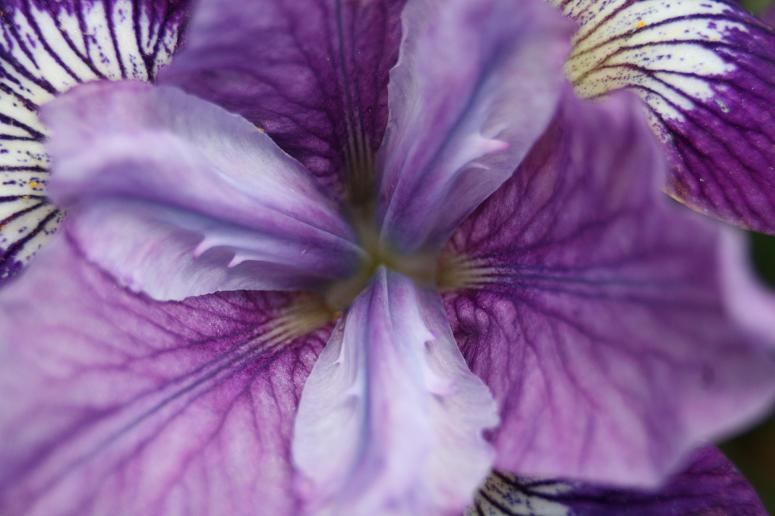
Copper iris unfolding
Copper iris after fog
Sizzling copper iris
I forget
I forget again
Stop asking, I don't remember this iris either. In fact, I'm ready to get rid of my iris.
Morning cloak on gold ninebark--ninebarks swarmed with butterflies this year!
Ninebark "fruit"
Martagon lily
Prairie smoke
Hosta leaf

And on elderberry blooms
Honeysuckle unfurling


So, which one is your favorite shot? The winning image will be tattooed on my cat.


Tuesday, May 8, 2012

Oklahoma Fortune Teller

Two weeks ago my uncle and aunt from Oklahoma dropped off a box that belonged to my grandma. It's filled with photos, funeral announcements, farm records, and even more photos. Grandma took a picture of every car she ever owned, from a 1940-something pickup to combines balanced precariously on small truck beds to her last 1990-something Cadillac sedan. There's a picture of my 20 year old parents in front of a GTO in about 1972. There are pictures of houses going up in divisions my grandpa and his sons built. There's an image of Grandma and her sisters in front of the 1894 homestead, the paint on the house still white, the windows intact--unlike the image I was in years later when I was about 9.

Back: "May 18, 1969--Dad would have been 80 on this Sunday.  We went to pick up a few last things in the house."

What was the ultimate treasure were some pieces of paper stapled together in my grandma's handwriting. Here she told of her courtship, marriage, and the immediate move to a Texas shack 100 feet from a railroad track. Someone on the passing train would toss them old magazines since they couldn't afford subscriptions and had no radio, let alone electricity. She had brought the top of their wedding cake with them, but the rats--who had chewed through the roof and were often on their bed--had eaten it.

1940 Chevy or Ford? First of nearly two dozen cars.

Though there's still a lot to go through, still much to fit together in an old ceiling fan box, one thing is clear--Grandma wrote this down for me. At the beginning of her story she asked how my cat was. If I went to church. That being a missionary would be a rewarding life. Somehow, she knew I'd become a quasi custodian of the remnants of her life, and would dine feverishly on the ashes of my ancestors. Maybe it was because I was the only male grandchild--I'd often get perks because of this. But is this memoir genetic or grandmotherly? Nature or nurture?

It is so overwhelming to me, this inevitable book, being the caretaker of fading echoes, piecing together scraps to form some half translucent image that is only 1/1,000th of the truth. But this is becoming my truth, a sort of gift evolving through a distance of time and place I'm always loathe to travel. Grandma knew, or she willed her knowing. And now I have another box of images and handwriting that seem like a second skin. Without me, I feel, nothing of this will last. Yet with me, the truth of these objects will change. Which makes our lives more unrecognizable? Which makes them more worth living?

If you'd like, read more about my book project via my trip to Oklahoma last spring.

Saturday, May 5, 2012

Deere John

A lawnmower poem this morning since they woke me up at 7:30 and literally have not stopped since. Please don't think this is a good poem, like one forthcoming in any of my books. I mean, the meter is WAY off--but I did try to get some feminine and slant rhymes in to mix it up. Gosh I'm a nerd.


Deere John

All day the mowers hum
making me deaf and numb.
I can’t hear the cardinals
warning each other of hawks,
I can’t trace the sweet smells
of coneflower or prairie phlox.

The dust billows over my fence
trailing butterflies torn from solace.
Thick exhaust makes me swoon
as my head fills like a balloon.

From dawn to dusk, and a little later,
I feel trapped inside my house,
unaware of what I’m missing.
If only I had a sledgehammer
to carefully, subtly announce—
look at what we’re missing.

Wednesday, May 2, 2012

Facing The Storm -- Story of The American Bison

"This land still has the memory of what the bison means to it."

I've read a lot in the last year on bison and prairie ecosystems, and the PBS documentary Facing the Storm hit every subject in under one hour (watch it here). Of course, it infuriated me and made me cry and made me leap for joy, but I'm a prairie nerd.

What most strikes me about our legacy with bison is what's now and next: that Montana continues to sponsor hunts / kills for bison who "escape" Yellowstone in the winter. How neat our national parks are. How contained like a garden. Here is where some things may be partially wild, but only here, and only how and when we want them. Our national parks are reflections of ourselves--we fear ourselves, we work so hard to control our wildness, our emotions, our passions. And the harder we work, the tighter the coil, so when we snap we snap big. We can't stand the illusion of our civilization, but we work hard to pretend we do--with helicopters and snowmobiles chasing animals.

Bison may be saved from extinction, but wild bison hardly exist at all. We pick and choose traits we favor, and breed out the wild. We try to breed out the wild in us, too--in cubicles, in ipads, in crazy bloggers using computers to ironically convey a message of the wild. Words fail here. Out there, out there they do not.

I want to see a buffalo commons in western Kansas come to fruition. Soon, the Ogallala aquifer will run dry there and the last remnants of duped settlers will be gone. I can't think of a better way to heal the land, our country, and ourselves then to see the apex creature return to the Plains--one that manages (what an awful word) the landscape far better than we do. That's why when I saw the image of bison grazing in a prairie dog town I fist pumped the air. Prairie dogs create lush vegetation for bison. Bison create landscapes for prairie dogs. Then all kinds of other wildlife come in and benefit even more.

We can't stand that the land still remembers the past. Our rows of GMO, chemical-infested corn can't cover it enough. Our doped-up, super fatty cattle can't cover it up even as they foul streams and trample grasslands and wildflowers. I think the Plains will return to some echo of their memory. But we carry that memory in us, too--the wonder of first coming across the ocean of grass, and the reverberation of rifles from passing train cars filled with sport hunters. 

Sunday, April 29, 2012

Wilkmeed (Milkweed is Not a Weed)

Let's start with a refresher--James Wright's wonderful poem.

Milkweed

While I stood here, in the open, lost in myself,
I must have looked a long time
Down the corn rows, beyond grass,
The small house,
White walls, animals lumbering toward the barn.
I look down now. It is all changed.
Whatever it was I lost, whatever I wept for
Was a wild, gentle thing, the small dark eyes
Loving me in secret.
It is here. At a touch of my hand,
The air fills with delicate creatures
From the other world.

Yesterday, I spent nearly seven hours at Spring Affair, billed as the largest plant sale in the Midwest. At 9am thousands rushed in, an in an hour or two half the plants were gone, a hundred tables suddenly empty. Pockets of plants were left here and there, most noticeably to me was milkweed (and ironweed, one monarchs love to nectar on). Of course, the hostas were selling like hotcakes.


My garden coaching business banner has a monarch prominently displayed, and many eyes lit up ten feet away as folks approached and regaled my wife and I with butterfly stories, while others asked what was going on with the influx of butterflies now (red admirals and sulphurs). Many spoke fondly of their butterfly bushes. When I asked if they had milkweed, I often heard "No. Should I have that?" Of course! No milkweed, no monarchs--and no lots of other butterflies gorging on that rich nectar.

We need more James Wright moments in our landscapes, and that's the primary reason when I was asked a couple times yesterday if I did speaking engagements, I rushed home and created a list of topics.

I also had enough people come up to me and say what a cool idea a native plant garden coach was, wishing me much success, that I feel emboldened (and exhausted), but unsure now what direction to take next. So, I'll start here with another plea: PLANT MILKWEED. Butterflies and other pollinating insects are in great need of our help as we spray chemicals first and ask questions later, like what happened to all the butterflies. Indeed, on a recent episode of a local garden show on PBS, advice was given to spray earthworms in the evening with sevin to control them (how many problems can you point out in that sentence?). 

If you have a butterfly garden, as many do, not having milkweed is like not having a butterfly garden at all. Asclepias incarnata, purpurascens, sullivanttii, syriaca. Go. Dig. Now. And stay away from chemicals. Soon, if you plant natives, the good bugs will control the bad bugs. I promise. The air will soon fill with delicate creatures from the other world.

Tuesday, April 24, 2012

Egg-Static!! Monarchs!!

We preempt this blog to bring you a breaking announcement. A very attractive and talented gardener, who also writes incredibly well, just saw his first monarchs--yes, plural--of the year. Both female. One very busy tasting all kinds of plants with her feet, placing eggs on many a milkweed. In three days we'll have caterpillars! Earliest I've ever seen the butterflies here.  PLANT MILKWEED. Asclepias incarnata (swamp) is my choice for non-invasive tendencies and sheer butterfly magnetism.

Nearly brought tears to my eyes. I'm such a geek.

Beginnings are Diversions

Today I'm feeling guilty, mostly because I've been away from thinking about my next book for several weeks, focusing on students and promoting my garden coaching endeavor. Sometimes it's a very fine line between doing things you love, and doing things for the sake of not doing something larger you also love (and maybe more). I hate the word "thing" though. Is garden coaching a diversion? Is it the flavor du jour? Writing is at the core of my identity and gauges my self worth, yet I lead an exclusionary, solitary life, not networking in all the circles that matter, almost alienating myself from my tribe. I've done that my whole life. Somehow, the tribe of gardens seems more real, more alive. Maybe it's the flowers--so immediate, so real, so pungent, so awash in life not their own. It's obvious how plants live their lives, and how they interact with the world, what meaning they have and give. Writers? Writing? Shadows only. Gardens are sentences filled with images and metaphors, waiting to be stories and books.

On Sunday my wife and I were at Earth Day, which was estimated to have 3,500 folks over five hours. It was the first time we publicly marketed my native prairie garden coaching business, and in 30mph winds it got a bit hairy. What I will remember most are what native plants and ecosystems can teach us that we have forgotten, especially since about, oh, 1950.

1) Wasps are beneficial insects. They pollinate. They kill pests. Wasps are not an enemy unless you grab a nest and stick it in your mouth. We need wasps.

2) And we need bees. I was selling a few small divisions--mountain mint (an insect and wasp mecca), goldenrod, sunflower, coneflower, blue sage--and many folks asked which got butterflies. All of them I said. Which got bees and wasps? All of them. I sold native bee houses made of bundled joe pye weed stalks and those went fast. I think we have a a strange fear and fascination with insects, some are good, some are bad. Whatever might hurt us is bad. But if the monarch butterfly--devoid of milkweed stands in the wild--were to perceptibly vanish, I'd be hurt to the core. Insects also feed baby songbirds, whose numbers are similarly dwindling in the face of a spray first suburban and rural existence, along with sprawl of both.

3) Kids can be smart. Whoa. One girl came by and told us about all the countries she's been to, all the nature she's seen. She couldn't have been much over 10 or 11. Another girl came back twice and just wanted to hang out and ask questions about plants and butterflies and anything. Go kids. Go nature.

My wife made the necklace she's wearing. Aren't we so Earth Day? (no)
 
We sold $1 plants (some divided, some grown in basement), seed packets (Salvia azurea 'Nekan' and Aster laevis), bee houses, and $5 books and photos from my garden / Etsy store. 

We'll be in the public spotlight one more time, this Saturday at Spring Affair. I'll try to scare together a few more bee house bundles. So far, my desire for an acreage where I grow native plants (perhaps in rows) and in a greenhouse has been flamed. I want a tent at the farmer's market pushing natives, showing folks how we need them, how awesome they are. Of course, Earth Day was preaching to the choir. Still, have to get your feet wet somewhere. Hopefully in a pond filled with bass on 100 acres. Still waiting for someone to gift me that. Ahem.


Thursday, April 19, 2012

Come Visit

Monarch Gardens, my new native prairie garden coaching business, will be making some appearances. You've got a couple chances to talk to me in person over the next week--and I promise you good conversation and lots of helpful info, among other goodies. I may even wear cologne.

Lincoln Earth Day
Party at Antelope Park
Sunday 4/22
12-5pm
Our booth is right across from the farmer's market. Can't miss it. 80 vendors will be there!

Spring Affair Plant Sale
Lancaster Event Center
Friday 4/27, 6-9pm (special preview party)
Saturday 4/28, 9-4pm
Our booth is in the front row facing the plants. Biggest plant sale in the Midwest! It gets crazy. Thousands of people.

Here's what you'll find at our booth:

-- Plants for sale, cheap (Earth Day only)
-- Native plant seeds
-- Fine art photograph prints
-- My Nebraska garden memoir: Sleep, Creep, Leap
-- Information on monarch butterflies, including how to raise them
-- Lists of the best native plants for wildlife, and why natives are so important
-- How to grow chemical free and often carefree
-- And maybe, if we get real lucky and the southern winds are strong, monarch eggs. Remember, milkweed is not a weed, which is why I call it wilkmeed.

If you're at Spring Affair you could hire me for a bit to walk around and pick out some good natives. Ahem.

In June I'll be presenting again on native Nebraska wildflowers at Finke Gardens. Hope to see you soon!

Sunday, April 15, 2012

Picture Picture

I've been posting some recent macro photos to my personal Facebook page, but I should also post them here--if anything, it's another way to keep track of the seasons. In case you haven't noticed, it's summer. I'd say, like most everyone, here in Nebraska we're 3-4 weeks ahead. Yesterday, there were reports of over 100 tornadoes in the central Plains (the cats and I were in the basement at 11:30 last night due to some supposed funnel clouds), but all we really saw was 4" of rain. That's our precipitation cycle this year: a deluge, then weeks of drought. Kind of like the photos I'm gonna toss up at you right now.

Golden Smokebush
Concord Grape
Pasque Flower
Kiss
Amsonia
Baptisia
Centaurea
Tulip
Tulip Petal
Maple
Lysimachia ciliata
Cloudy Crabapple

Thursday, April 12, 2012

The New Veggie Bed

This year, for reasons I still can't quite discern, I'm trying my hand at vegetables. For the first time. Ever.

Folks say, "Oh yeah, veggies are easy." But then I start reading about companion plants, the many pests, vine borers, cabbage beetles, hail, fire and brimstone--and I think to myself, "Geeze, 1,500 feet of prairie plants are WAAAAY easier than this. I don't have to touch them but once a year."

Still, making a new bed got me some exercise. An early tan. Bruises, cuts, gangrene, a nervous tic that makes me point at the ground in order to stretch my dirt-caked and contorted fingers. If this doesn't work out, I have 80 new square feet for either a trial bed or transplant bed for indoor seedlings (which are going tolerably well, about 75% germination).

Way too tiny original bed about 2' deep.

Moved aluminum edging for new 4' bed.


Turned over 80' of wet clay fescue.

Added 1-1.5 yards of city soil.


I was planning on making 5 trips with plastic tubs in my hatchback to the city dump, where there's free compost (this stuff has been magic in my garden). On the first trip I met a guy who flagged me down, offered to help me load my car, then offered to deliver all the compost I'd need for a modest fee. Local landscaping companies would've charged five times as much. I was a happy camper who doesn't like camping.

Since this is my first year flirting with vegetables, I just ordered seeds I could get with a coupon--no heirlooms, nothing too fussy I hope. Broccoli, spinach, eggplant, bush beans, pole beans, summer squash, watermelon, pumpkin. The pumpkin and pole beans I'll sow elsewhere in my main garden once the tulips die back (and since they're blooming 4 weeks early, this should be well before the "normal" last frost date in early May).

Tuesday, April 10, 2012

It's Not a Memoir

Months ago I promised myself and this blog's mercurial audience that I'd post about my progress writing my next memoir. Well, I'm not writing it.

Not that I won't, I'm just not doing it right now. Even though it's the thing I want to do and accomplish more than anything in the world. And it's the perfect time to be doing it. And I really do have to be doing it to "further my career" -- I need fresh fish in the pan.

I've spent nearly three years researching Turkey Red, digging and crawling my way through it all, amassing some 500 pages of notes and annotations and maps and drawings and interviews and videos and images. See, it's just all so much--too much, in fact. And it's supposed to be.

I'm beat down. Hunched over. Heavy footed. Delirious. Where do I possibly begin? How do I make all the notes into a moving narrative? Where do I fit in with the research, the family stories, the Great Plains? I don't know. I do know that writing will get me to knowing, but right now I don't even have a place to start, nothing that spins my heart, that makes my heart ache, that makes me swoon and overflow with passion.

I'm waiting for this. I know this is a dangerous game, because in writing you don't wait, serious and real writers don't wait--they go. They do. The muse is a fallacy. Writers make the book come to them. But I can't. I've never been able to do that from the start--later, in editing, yes--but not from the start. I need a deep-threaded vibe that stretches from me into every space and time and living thing.

So, I'm doing what I most fear and loathe to do--letting the material soak. Seeing what percolates, bubbles, rises to the top. What ferments. I must be patient. This is not a book I can force through on one draft, realize it's awful, and write a whole other book again. My writing process is not amenable to that at all. I must be with it and in it on that first draft, heart and soul, festering and oozing all the bison, prairie dogs, bluestem, Mennonite farmers, Cheyenne school children, oil booms, sooners, my grandmother's stories, and the agony of my childhood in Oklahoma.

So hush now, memoir. Sleep. Stay still right there as I close the door. Soon, I reckon, I'll come crashing in a mad dash to you, screaming wildly late one night, and tear through dozens of new pages--perhaps a whole book in a month or two. That's fine. We wait for one another for when the time is right. But when it's time, we must be alert enough to recognize it, and to dig in and go mad in obstinate faith, diligence, devotion, and desire. Ready the body and mind. Nurture the soul. Listen.

Tuesday, April 3, 2012

UNL Campus Springing Sculptures

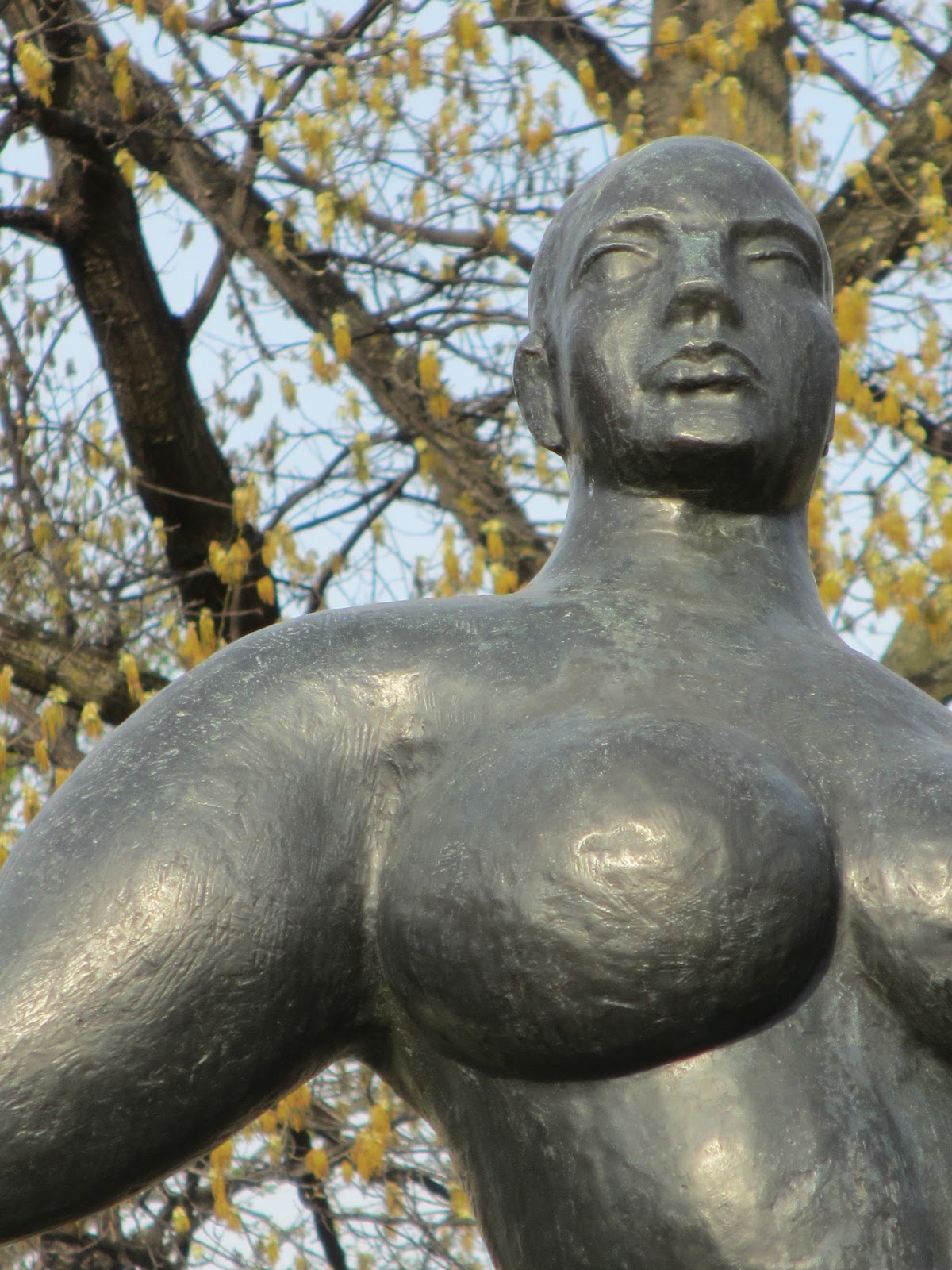
While I had two classes doing a creative writing exercise outside, I took advantage of the time and weather to stroll around the Sheldon Art Gallery's sculpture garden. I really wanted a donut, but I refrained. Art and nature, a winning combination without saturated fats.

Crabapple


The previous sculpture from the front.
Pasque flower.


Redbud and dogwood being horizontal.

A moving piece tucked behind a hedge.
Redbud

I like the color and textures.

Front steps.


Even the manhole covers are artistic here.
It's a pretty campus in spring filled with flowering shrubs and trees galore. In the fall and winter the birds have a grand ole time with berries. Now, if only some of the unused lawn spaces could be patches of prairie. I dream of one day teaching a writing class that uses knowledge of plants--names and medicinal properties and folklore. Maybe taking field trips to gardens and reserves, crossing with other departments. That'd be fun.
.

Sunday, April 1, 2012

A New Essay, & Tulip Bee

For every essay I'm able to publish, roughly 20-30 publications reject my work. More and more often with compliments. But here's a piece that finally found a home after a few close calls, titled Across the Flats--which ends my unpublished memoir Morning Glory. It's about plant shopping with my mom after losing my childhood home, solitude, creativity, depression, and marriage. The essay refers to Ambergate Gardens in Minnesota, link here for pics.

And yesterday I ran across this bee rubbing herself on tulip pollen (3-4 weeks early) like a cat would on catnip.


Thursday, March 29, 2012

Prairie Garden Coaching Right Here

I'm looking to help you plant natives. No job is too big or too small, too messy or too clean of a slate. Give me your tired lawns and overgrown hedges, your wildlife yearning for sanctuary in a chem-free environment. Give me your new build, your deck pots, your cRaZy landscape, your right of ways and school grounds. Link on over.

Tuesday, March 27, 2012

Healing the Garden & Ourselves

As I ready the landscape for spring, I'm reminded of Linda Hogan's words, which we've just read in my English classes. Her book is Dwellings: A Spiritual History of the Living World, and highly recommended. 

"The word rake means to gather or heap up, to smooth the broken ground. That's what this work is, all of it, the smoothing over of broken ground, the healing of the severed trust we humans hold with earth. We gather it back together again with great care, take the broken pieces and fragments and return them to the sky. It is work at the borderland between species, at the boundary between injury and healing."

And as I cut down old sunflower stems beneath migrating snow geese and sand hill cranes half a mile above:

"In this one plant, in one summer season, a drama of need and survival took place. Hungers were filled. Insects coupled. There was escape, exhaustion, and death. Lives touched down a moment and were gone.

I was an outsider. I only watched. I never learned the sunflower's golden language or the tongues of its citizens. I had a small understanding, nothing more than a shallow observation of the flower, insects, and birds. But they knew what to do, how to live. An old voice from somewhere, gene or cell, told the plant how to evade the pull of gravity and find its way upward, how to open. It was instinct, intuition, necessity. A certain knowing directed the seed-bearing birds on paths to ancestral homelands they had never seen. They believed it. They followed."

Saturday, March 24, 2012

L.A.W.N. -- Lusty Advocate for Wayward Nihilism

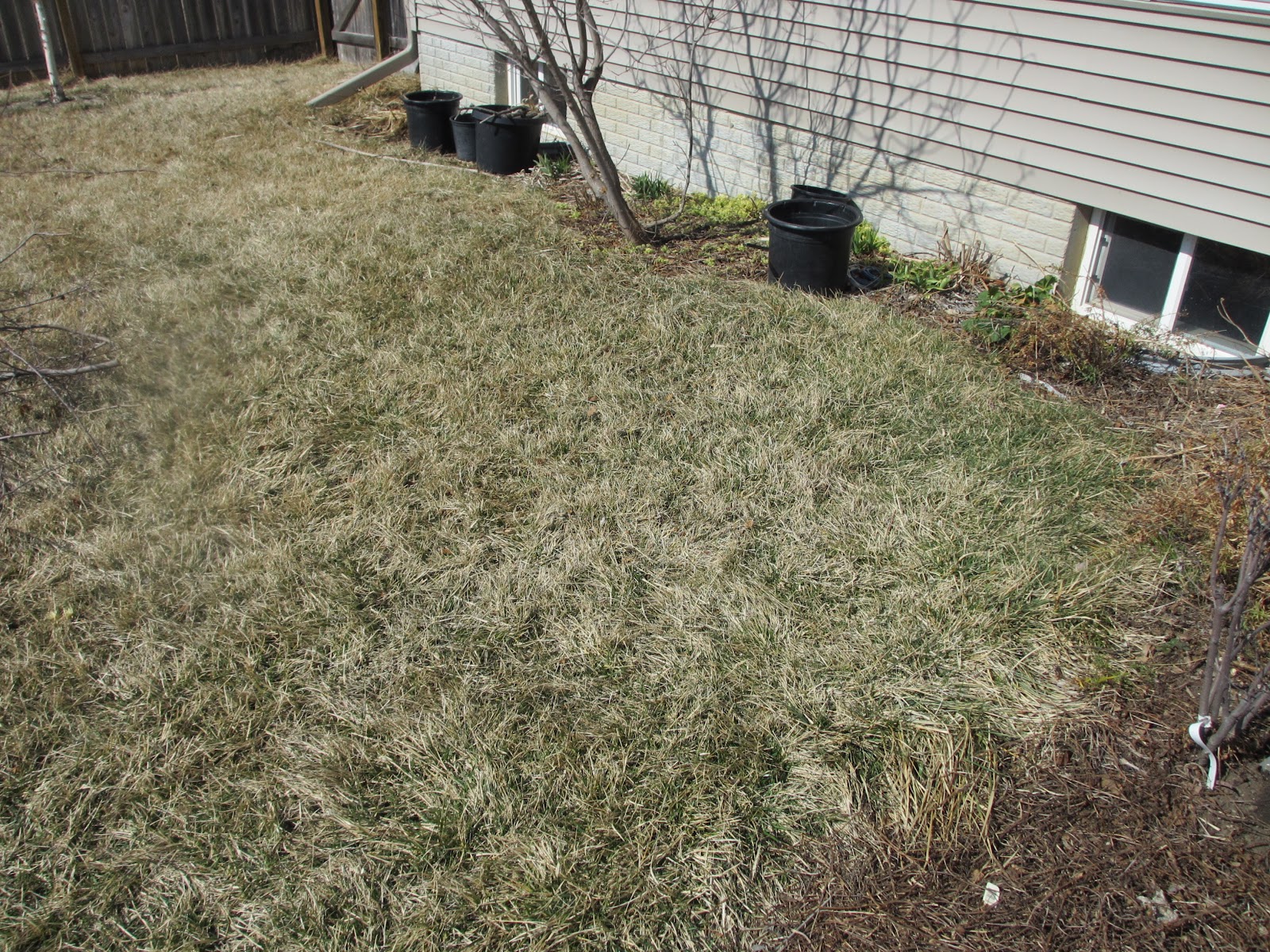
It has begun weeks early. As I type my walls are vibrating, and my neighbor is dripping sweat about to fall over, pushing his slave-driving mechanism back and forth over a chemically-dependent lawn, green unnaturally early. He must love it, because the instant the lawn turned this week he's out there.

The guy across the street mowed last weekend before his lawn was 50% green. Now that it's 75% he made sure to get up at 9 this morning and let everyone know 6 months of sheer hell was upon us like some starving grizzly bear looking for a mate.

I really, really must know what's with this ritual, why people enjoy this, what they get out of it, why these lawns are so important, what it does for them, what drives them. If I walked around the neighborhood taking an informal survey, I'd just end up getting punched in the face. But it beats hearing lawnmowers, smelling that exhaust, thinking about the greenhouse effect and all the money we give to petro-chemical corporations, imagining fields of wildflowers paved over with rolls of sod, watching birds flee to trees like ghosts.

The only wildlife I see in lawns around here are dogs squatting over brown patches laying chocolate eggs. 

We need an acronym, so if you come up with a good one, let me know. Here are some:

L.A.W.N.

Likely A Wonky Nationalism

Leaping Anally While Needy

Look, A-holes Waking Neighborhood

Lacking Any Wisdom (about) Nature

Lusty Advocate for Wayward Nihilism

Lusciously Against Wildlife & Nature