Friday, November 15, 2013

We Are Prairie

For a while we inhabit our bodies, fill them with signals of our being -- colors and scents, desires and actions, calls out into the abyss until a few find us and we become one. We are like the coneflower, a ray of inflorescence, stamens sticky with faith. We fade. We get sharp. We get stuck to whatever passes by. We're carried out into the autumn and like ghosts some part of us surfaces far away. Again and again, over and over, our shadows echo and call back to one another. Where will we bloom again. Will we ever bloom again. Or is this moment the only one and we must live it hard enough to last a hundred lifetimes. This is the prairie inside of us. We are prairie.
 

Wednesday, November 13, 2013

As Prairie Vanishes, Our Morals Follow

I read too many articles that just really fire me up, get me angry -- piss me off (better off than on?). It always frustrates me when people say we need more corn fields to feed the world. First, the majority of corn goes to make ethanol. Second, corn is used to quickly stuff cattle in finishing lots, making the meat fattier and a leading contributor to human heart disease. Third, we already waste something like 50% of the food we have due to spoilage at home or in the grocery store or in transport from half a world away.

"This expansion of the Corn Belt is fueled in part by America's green energy policy, which requires oil companies to blend billions of gallons of corn ethanol into their gasoline. In 2010, fuel became the No. 1 use for corn in America, a title it held in 2011 and 2012 and narrowly lost this year. That helps keep prices high."

"What the green-energy program has made profitable, however, is far from green. A policy intended to reduce global warming is encouraging a farming practice that actually could worsen it. That's because plowing into untouched grassland releases carbon dioxide that has been naturally locked in the soil. It also increases erosion and requires farmers to use fertilizers and other industrial chemicals. In turn, that destroys native plants and wipes out wildlife habitats."

"It appeared so damaging that scientists warned that America's corn-for-ethanol policy would fail as an anti-global warming strategy if too many farmers plowed over virgin land.The Obama administration argued that would not happen. But the administration didn't set up a way to monitor whether it actually happened. It did. More than 1.2 million acres of grassland have been lost since the federal government required that gasoline be blended with increasing amounts of ethanol, an Associated Press analysis of satellite data found. Plots that were wild grass or pastureland seven years ago are now corn and soybean fields. That's in addition to the 5 million acres of farmland that had been aside for conservation - more than Yellowstone, Everglades and Yosemite National Parks combined - that have vanished since Obama took office."

"Nebraska has lost at least 830,000 acres of grassland, a total larger than New York City, Los Angeles and Dallas combined."

"...much of the land being converted is not suited to crop production, and South Dakota's strong winds and rains will erode the topsoil."

Full article here.

And so I feel a moral imperative to cash out all I own, buy as much land as I can, and seed the crap out of it with prairie. And this is also why you should use as many native plants out your door as you can -- not because you're helping preserve prairie or their ecosystems, but because you're aware of the power of prairie, ready to learn more about it, saying to your neighbors this is not who we have to be, we can be better. 

Thursday, November 7, 2013

An Orgy of Fall Photos

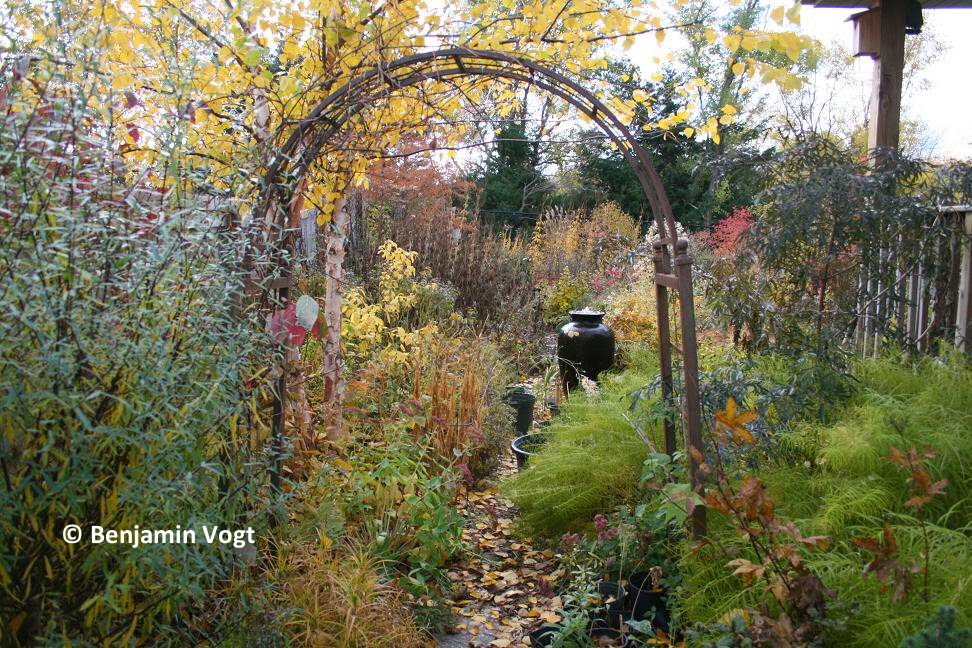
Soon enough this blog will enter its winter period -- which this year will mean garden and environmental manifestos as I work on a new book. But before those rants and deep ecology posts, let us gorge ourselves on one fantastic fall in the garden. Let me know what you think. The colors will run well into the end of the month -- it's a nice 2 month long show here in Nebraska!


7 species of prairie flowers seeded in veg bed
Autumn sunsets are the best

Tuesday, October 29, 2013

The New Garden Landscape

This is my vision for the 21st century garden -- a space that embraces both the aesthetic /artistic expression of the creator / owner, and that pays attention to the local ecology by creating as much of a native wildlife habitat as possible. 

I do not see ecology and garden design as mutually exclusive or in any way opposed to one another. Yes, this means gardening may tax our brains a bit more, and nurseries and architects and landscapers will have to educate more. But you know what? I'm seeing a true hunger for that education in every talk I give, in every consult I do.

Sure, using native plants is not a silver bullet, so please don't you dare tag me with a "purist" label; gardens can never be true representations of local, native ecology because they are artifice and are too small-scale to do much on their own. But our landscapes do link up and create park corridors -- it's the whole idea behind lawns in suburbia. What if those lawns were forests, shurblands, or prairies? Yes, they might never be able to function indepentently like "wild" ecosystems, but they'd still provide for a far greater diversity of wildlife and mitigate our pollution, runnoff, help on electric bills, etc. I see a wildlife corridor just in the thin tree line that goes along my back property.


When I hear someone say we should just let gardeners be, let folks do whatever they want, I feel pretty aggravated. The status quo is what's gotten us into the whole mess of climate change and ecosystem fragmentation, dirty air, dirty water, asthma, and perhaps ADHD and a host of other environmentally-induced illnesses. 

Let's hook gardeners on native plants that amend the life in the soil and in the air. It's easy. Everyone wants to see more butterflies and birds. So let's go with viburnum, serviceberry, milkweed, liatris, ironweed, etc. Plant a few of those in a landscape and suddenly the human residents notice something special, start thinking, start connecting the dots, start reading and learning, and then do more. They become wildlife refuge managers without even knowing it. Bam. Citizen scientists. Cool people. Stewards. Important activists.

You can't plant whatever you want anymore. I'm not saying we need a plant police, but you also can't just dump used paint or fluorescent lights out back either, can you? Let people be? Foster the ignorance is bliss theory? Nah. Not for me. We can use native plants in any landscape design, but it does require more upfront thinking and planning; you can't just call 1-800-landscaper and have them plop in the standard fare of spiraea, barberry, miscanthus, and some doomed annuals. Waste of money. No benefit to wildlife or local ecology.


The fact that we are killing off 6,000 species a year and spilling oil all over the place is a sad, depressing fact. But the bigger fact is we don't have to -- we know the better alternatives, and not pursuing them is a clear moral / ethical imperative we are failing with gusto. If you are depressed by the reality of what we do to the planet, then sticking your head in the sand and hoping for the best -- or pleading to just let gardeners do whatever makes them happy -- won't fix a thing. What will fix a thing and bring you true joy is planting native plants, getting to know your local ecosystems and species, and setting an example in your neighborhood by ripping out lawn maintained by gasoline, fertilizer, and clean water. Every gardener has immense power -- and the joy produced by the larger amount of wildlife your native plants attract will far outstrip the pretend, plastic joy of just doing whatever you want (like planting nonnative crap from big box stores).

Two great pieces this week that speak more specifically about the above aspects can be found via Chris Helzer (The Conservation Value of Backyard Prairies) and Thomas Rainer (Mingle or Clump).

Sunday, October 20, 2013

Following One Path

This fall I've become particularly enamored with one path, one portion in my small garden. I think it may be two asters that I self sowed themselves -- I just don't remember planting them. They are growing into blue sentinels across from each other on this one path, covered in insects, glowing in four dimensions. This is what I like about a garden that's now wilding -- I can be surprised year to year and take deep pleasure in the angles of light, the new reflections of life, the shifting form and function of even one small area. 


Wednesday, October 16, 2013

Morality and Ecosystems

I'm not the only "crazy" one linking morality and ethics to nature and landscapes (I've known this for some time, though). I just finished Rambunctious Garden by Emma Marris, and while I spent most of the book pissed off both by some things she was saying and how she was saying them, by the time I got toward the end I realized we had similar goals. It doesn't hurt that she uses Aldo Leopold to get her point across more than once.

"In the late 1940s conservation icon Aldo Leopold called the recognition of the inherent value of an ecosystem a land ethic. The land ethic extends to 'soils, waters, plants and animals' the same moral obligations we currently have to members of our human communities.... In modern terms, the land ethic espouses a biocentric view of life, which gives other species and ecosystems moral status."

She goes on to discuss deep ecology and philosopher Arne Naess. Shallow ecology is looking after the earth as an extension of looking after the self. But in deep ecology all living things have value simply because they are. Humans are not especially priveleged but are nodes in a complex web. Taking care of ourselves means taking care of the environment. Deep ecology sounds a lot like taking care of those you love, and those you don't know who are less fortunate, except we now extend this to other lives beyond our own species. I'm not sure why this is so hard to grasp or practice.

Leopold and deep ecology are things I've studied, but so long ago I let them slip away. Suddenly, in a few lines, Marris shows me that these writings had a profound effect on how I view the world and define my work.

"Rich westerners, especially, must quit tapping into nature at such a furious pace to satisfy the frivolous desires of their consumer society. Human beings must reduce their population so that we can live more lightly on the Earth. These are all moral obligations to the natural world, not mere choices."

"We are used to the idea that individual lives are fundamentally valuable; it is the basis of the sense that murder is wrong. It is harder to set values for morphous collectons like 'ecosystems' or 'the land' or for nonliving entities like 'the soil' or a stream. Some ethicists, however, certainly hold that these entities have their own intrinsic value. Some even propose that the entire Earth itself holds value as a single human does...."

She goes on to say losing native plants and ecosystems is like losing a language, a culture. Yup. Hell yup. 

Sunday, October 13, 2013

Milkweed Ethics

The last few days I've been dividing and planting out milkweed seedlings that I winter sowed last year; they've grown into healthy young plants this whole summer. I was able to get about a half dozen common milkweed, and maybe a dozen swamp milkweed.

Asclepias incarnata has great fall color!
Every day I read an article about the 80% drop in numbers of last winter's monarch population in Mexico, and then a 90% drop in the North America summer population this year. You've got logging in Mexico, spraying glyphosate in agricultural fields of the Plains and Midwest, roads and cities, less wild flowers to nectar on, less milkweed to lay eggs on. This is a species potentially on the brink in most of the U.S. and Canada, but it's one of many thousands more we don't see as commonly, that isn't as big and bright or as enchanting for most folks to watch as it flits through the air.

We are a nation of 40 million gardeners -- we have immense power to do the right thing, and there is a right thing to be done. Plant milkweed. Not one. Not two. But a dozen right out your door. Rip up more lawn and put in a native flower bed rich with nectar. Toss in more milkweed there. We are directly causing climate change, we are directly eroding habitat through ag subsidies and suburban sprawl and mining and tar sands and marsh draining. Those are huge, sprawling issues we can't tackle alone -- but with collective small acts we can erode the physical and psychological damage. Every milkweed planted is a blow against our worst selves.

We are eradicating a species' home -- it's not the monarch's, it's ours. And the root of the entire issue is that we see ourselves disconnected from life. We are self centered, whether as a product of our evolution or our culture or both. It's not a completely bad thing to be self serving and aware. A lot of you reading this blog garden -- you know what happens when you sit in the garden and watch a bee or butterfly or bird for 10, 20, 30 minutes. You know we aren't disconnected. Maybe that's transcendence, maybe it's pure love, maybe it's just being human and embracing wonder on a 1 to 1 level.

Plant a milkweed and rewrite our ethical codes. Garden as selflessly as, in the most ideal times, you live selflessly for others you love. Garden for yourself. Garden inward. Garden for your own pleasure. Garden to bring in butterflies. Garden for milkweed. Garden for all that is seen and unseen. Garden for hope and faith in the planet that birthed us and allowed us to have these quandaries of crisis, doubt, and change. Plant a milkweed.

Monday, October 7, 2013

October Flowers and Grasses Washed in Light

Someday I'll have the garden of my dreams, but for now I'll have to live with this. I can manage.


Cheating with Liatirs mucronata -- it's native to the southern Plains and so blooms later here.
10-12' ironweed

2" of rain last week. Very nice.

Tuesday, October 1, 2013

Seed Me

27 lunch bags and counting. I figure I'll make it to 40. The plan is to winter sow as many species as I can (in pots and beds), and then, perhaps, use most of the seed to start a nursery business on an acreage next year. Maybe. For now, the kitchen table is serving prairie.


Friday, September 27, 2013

You Can Garden How You Want, But....

.... the ethical imperative to garden differently is glaring. This from AMERICAN GREEN by Ted Steinberg:

1) Between 1994 and 2004, an estimated average of 75,884 Americans each year were injured using lawn mowers, or roughly the same number of people injured by firearms.

2) Using a gas-powered leaf blower for half an hour creates as many polluting hydrocarbon emissions as driving a car 7,700 miles at a speed of 30mph.

3) Approximately 7 million birds die each year because of lawn-care pesticides (and that's just lawn care, not including shrubs, trees, flowers, or agriculture).

4) In the process of refueling lawn care equipment, Americans spill 17 million gallons of gas every summer, or 50% more oil than the Exxon Valdez spilled off of Alaska.

5) A single golf course in Tampa (Florida alone has over 1,000 courses) uses 178,800 gallons of water per day, enough to meet the daily fresh water needs of more than 2,200 Americans.

6) Lawn chemicals are tracked into the home often, where they build up in carpet, this placing small children, whose developing bodies are far more vulnerable to toxins, at risk of chronic exposure. 


Sunday, September 22, 2013

Twilight on the Tallgrass -- Spring Creek Prairie

This is the place my wife and I had our wedding reception six years ago, but last night we were at their annual festival. Spring Creek is a virgin tallgrass island in a sea of cash crops, still sporting wagon ruts from an Oregon Trail cutoff, over 800 acres in size about 7 miles due southwest of Lincoln, Nebraska. There are plans to connect this prairie and the one near our home in Pioneers Park with a prairie corridor -- hopefully this happens within the next decade or so.


Sunday, September 15, 2013

Presentation, Plant Sale, Open Garden

This Saturday, 9/21, I'm opening my heart and soul to anyone who wants to poke and prod it. 

At 1pm I'll give a roughly 30 minute powerpoint presentation on native plants for wildlife that work well for me (if you've seen my talks before it'll pretty much be the same thing). I'll have enough seats for about 15 people, then you have to stand.

At 1:30pm, or a fuzz later, I'll open the garden for tours, questions, and a plant sale (proceeds of which will go straight into my buy a prairie / restore a prairie / start artist residency and nursery fund).

Come see the beginning blooms of the last fall flowers, and hopefully the peak migration of monarch butterflies as they come south.

Either before or after stopping by here, you should also visit the Nebraska Statewide Arboretum native plant sale over on UNL's east campus. Great folks, great plants!


Saturday 9/21
1:00 to 3:00 pm
3755 W. Plum St.
Lincoln, Nebraska
RAIN DATE -- Next day, same prairie time, same prairie channel

Some of the 50 or so plants I'll have, $3-5 each, include:

Stiff Goldenrod
Zigzag Goldenrod
Blue Pitcher Sage
Wild Senna
Mystery Liatris (is it white or purple, low or tall?)
Monkey Flower
Milkweed
Amsonia hubrichtii
Eupatorium Coelestinum
Caryopteris
Iris
Prairie Cascade Willow (rooted tree cutting)
Dig you own / beg me to chop it and dig it Mystery Hosta
Some sort of white Spiraea that needs a wetter area than I can give it (needs to be dug)

I plan to have another plant sale next May or June -- this one will have tons of flowers, grasses, and sedges from seeds gathered from my open-pollinated, organic garden.

Friday, September 13, 2013

Unbroken

Out here in Nebraska prairie is an endangered species. In a little over a century it's been pushed back to bad soil, roadsides, and graveyards. Within it countless flora and fauna have broken. With no understanding we alter the landscape, we erase power before we understand, we undermine hope, we negate other cultures. We've done this for so long it doesn't seem wrong. I plant a bluestem and a milkweed where I can -- the act a shout against progress and manifest destiny, against hubris and ignorance. No one may hear me but one lone monarch filled with a deeper sense of this place than I'll ever have, the memory passed down over thousands of generations, unbroken like the prairie that not so long ago swept over the horizon.

Yes, it's on ironweed, but that's what's blooming now.

Tuesday, September 10, 2013

To Butterfly Bush or to Not Butterfly Bush (Or to Native or Not to Native)

No other plant seems to get people's engines revving more than butterfly bush. I mean heated arguments -- I've been in my fair share. Is it invasive or not? Well, Oregon doesn't let it into the state, and the USDA says it's naturalized on both coasts, and even in parts of eastern Kansas.

But that's not the core issue.

Does it support lots of insects by providing good nectar? If one person sees one monarch nectarting on it one day, it's always assumed to be a good plant to help butterflies. Whenever I say -- and I am not lying to prove a point -- that my native prairie perennials see 50x the insect action than butterfly bush, I hear "I have plenty of butterflies on mine." Maybe you do. Maybe you don't. Doesn't really matter. Butterflies are one kind of insect, and I have NEVER seen a soldier beetle, or any beetle, or fly or wasp, on butterfly bush (let alone a caterpillar munching on its leaves). A few bumblebees, yes, and some hummingbird moth species. The point is when my prairie clover, coneflowers, mountain mint, rudbeckia, culver's root, ironweed, jow pye weed, milkweed, goldenrod, aster, viburnum, ninebark, serviceberry, baptisia, pasque flower, boneset, and countless other natives are in bloom, they are COVERED in a DIVERSE set of insect species. I wave my hand over them and a literal buzzing cloud lifts up like steam then settles like snow. I can't do that on butterfly bush.

But that's not the core issue.

White-lines sphinx moth on New England aster
I don't give a rip about supporting just one type of insect, since songbird chicks eat a 100% diet of insects, as do most adult songbirds (in decline due to habitat loss). 1 in 3 bites of food we humans take began with the act of a pollinating insect, not just a pollinating butterfly.

Still, not the core issue.

Here's where I get lambasted the most -- plant choices in our landscapes are moral choices. Just like shopping at a local business is a moral choice, going to a farmer's market, consolidating trips in a car, not using plastic bottles, not slamming a door on someone's face, not driving drunk, not using racial slurs, not beating your spouse, not shooting prairie dogs for entertainment.

IDK on Agastache foeniculum
This is the core issue:

Using plants native to your locale is a moral and ethical choice.

This statement insinuates that if you have a hosta I think you're an immoral, self-centered, planet-degrading a-hole. I wouldn't go that far, but we're on that sliding scale, I must admit. Here in eastern Nebraska 99% of the tallgrass prairie is gone, replaced my publically-subsidized monocultures that fatten cattle in terrible feedlots, poison our food supply, and create a bridge fuel (ethanol) which is like plugging a leak in the boat by adding food dye to the water. What does the loss of prairie say about who we are and what we value?

The preservation of our world is no matter to take lightly. When you plant with natives you are standing up against corporations that rape and poison this planet for profit, that own our government, and you're standing up against social, racial, and gender inequality. I know that seems like a leap, but it's all related, it all comes from the same root of choices we make every day in our hearts and minds. (I always wonder why the term is "mother nature," as if that gender gives us more inherent rights over it, that is then passive and submissive, simply a backup support to something or someone more important.)

If wanting to ensure a livable future for subsequent generations labels me as a native plant purist, then get that branding iron out of the fire -- here's my bare rump.

It's easy to dismiss issues that make us uncomfortable, that highlight our complicity in ecological harm. It hurts. It should hurt. But I'm not asking for you to feel guilty or ashamed -- I'm asking you to take stock of what you know and see and experience, and reflect on what's really going on beneath the shiny surface fed to us in our daily lives. What do you believe in? Should you? I ask this of my college students all the time. I'm asking you, too.

E. altissimum, Rudbeckia, A. azureus
You are certainly free to plant whatever you want, just as you are free (in America, theoretically) to practice whatever religion you want, eat what you want, love what you want, hate what you want. But we innately know where the moral lines are in our unique existence. I don't believe that any gardener can be a gardener without understanding and feeling the life our plants give, the wild systems at play, our hand for better or worse in the natural world, and not garden selflessly. If we garden selflessly, suddenly we get FAR more in and from the garden than we ever could have imagined. That selfless gardening begins with native plants and local ecosystems.

For more on the butterfly bush vs. native plants debate:

-- The North American Butterfly Association did a feisty spread
-- This ecologist goes deeper than I did above, so you might not like him
-- And I did a post suggesting alternative plants here
-- Maybe if I make you cry about a swallowtail I helped, you'll see where I'm coming from better.

Sunday, September 8, 2013

Why I'm Becoming a Native Plant Purist

Because Trans Canada wants to put a pipeline through the Nebraska sandhills and above the Ogalalla Aquifer, and the oil is coming from tar sands which could be worse than mountain top removal mining when it comes to destruction of landscapes.

Because the next generation may not know what a rhino or elephant or polar bear is.

Because the arctic had the lowest recorded levels of summer ice ever.

Because our taxes go to subsidize farmers who can't afford GMO seeds and who plow up marginal prairie in order to cash in on high commidty prices (oh, there's crop insurance too for all this so there's little gamble).

Because we perpetuate a myth about wilderness and nature, about the Midwest, about the yeoman farmer and his family, about American progress.

Because ADHD has been linked to chemicals in our environment and a lack of engagement with outdoor play in places other than soccer fields and playgrounds.

Because racism, sexism, and other intolerance is tied to how we live in nature, what we think of it, how we act toward it directly and indirectly.

Because there's a floating garbage patch the size of Texas in the middle of the Pacific Ocean.

Because feed lots exist.

Because when we lose wilderness, we lose our cultural, regional, and national identity. We grow a little bit more disconnected from "home" and each other.

Because when I walk my college class across campus not one of them can tell me that's a blue jay in the oak tree calling out. Or that over there it's a robin.

Because being a native plant purist is equivalent on the "crazy" scale to wanting equal rights for minorities, or good healthcare, or fair wages, or a government not owned by massive corporations.

Because the silhouette of a prairie orchid at sunset makes me swoon.


Thursday, September 5, 2013

Ludicrous Speed -- Fall Events

I'm not sure where summer went. Fastest one ever. I am certain that it was just last week when I bid farewell to the four classes I was teaching at two colleges, thrilled to have a long 3 month summer to research and finish the first draft of my prairie memoir (I got close, at 85,000 words). Now, the second week of school has ended and my calendar is piled high with events.

I'm on the board of Wachiska Audubon Society, a prairie education and conservation group, and our 40th anniversary gala is this weekend. National Audubon president David Yarnold is speaking, the mayor is giving him an award, we're giving an award to photographer Joel Sartore, and dozens of silent auction items will be up for grabs (including a cool hand-written poem and sketches by Ted Kooser). Yeah, I'm pumped, plus we're sold out at over 230 guests.

9/21 is Twilight on the Tallgrass down at Spring Creek Prairie in Denton, NE from 5-10pm. Just $5 for a lovey evening of events.

9/27 is the Pioneers Park Nature Center's fundraiser, Beer, Brats, and Bison from 6:30-8pm. $25 tickets in advance get you, well, beer, brats, and bison.

9/29 My wife and I will be at one of the last Old Cheney Road farmer's market from 10-2, spreading the words about Monarch Gardens, butterflies, and native plant habitat.

And either on 9/14 or 9/21 I'm going to host a presentation on native plants I like, open my garden for a tour, and sell a very small number of plants. Either of those afternoons, so stay tuned here or on Facebook and I'll hope to see you sometime this month. Prairie on!

Saturday, August 31, 2013

Why Do Garden Designers Resist Native Plant Landscapes?

If you've been reading this blog since early July, you know how I feel about native plants and ecosystems, about what we're doing to the planet and to ourselves.

Gardening with native plants is a moral imperative. Period. A lot of landscape designers and architects who've been in the business much longer than me often decry my plea for all or mostly native plant landscapes. I tend to have a knee jerk reaction that makes me wonder how stuck in the mud they are.
  • "It can't be done where I live"
  • "There just aren't enough choices"
  • "My clients would never go for it"
Aren't landscape designers also educators by nature? Don't clients often simply defer to their judgement and knowledge? And why can't we dream big? What happened to the desire to change the world for the better? Isn't that one of the core tenants of gardening, of wanting to be a gardener, of designing landscapes? If our human vision for a better world fails here in the garden with those who have the greatest environmental imgaination, it fails everywhere. The way we design a garden is the way we live, our beliefs given form. It's time to draw a line in the garden -- just as we'd expect it drawn for healthcare, green energy, poverty, etc, all issues directly related to our environmental footprint.

So, how many of you landscape designers would lose work if you suggested / pushed more native plants? How much work would you lose? Some say compatible and well-behaved exotics are fine and necessary to use along with natives in order to increase the pallet and diversity -- but do we know when an exotic will become invasive? Do we have proof that it is as beneficial to wildlife, especially pollinating insects (for nectar AND as a host plant)? We'd have to have a plant by plant case study, probably county by county too, but there is much research pointing to the fact larvae need native plants as hosts, and that adult insects have as much of an evolutionary tie to the leaves as they do with the nectar and the flower shapes that draw them in. And that's just what's happening above the soil surface.

So without knowing a plant fully (or predicting the future), how can we responsibly suggest these to clients? How can we garden with ALL of the wildlife in mind or the nearby ecology, a holistic gardening that goes beyond just our artistic ideal and vision, and begin to combine how we see a landscape with what it really is and was before colonization and houses and roads and telephone poles, and how it responsibly rebuilds what we've pushed to the brink and insures a healthy future? Designing with natives is a test of our ethics; we are often bankrupt in that regard. We are lucky to live in a country where environmental destruction is relatively recent -- there are still patches, echoes of native wildness we can take a cue from; they call out to us like someone being carried away in a flash flood. Thousands of species go extinct globally each year, most as a direct result of our action, or inaction.

Gardening can no longer be about aesthetics alone, and this move must start with designers and architects. There is a massive and burgeoning desire to garden locally (it ties into the local food movement) -- plants raised within a nearby radius, plants grown from open-pollinated seed collected within that same radius, plants not sprayed with pesticides. When we begin to garden like this, we know our place more, we connect, we thrive, we care about our home. We live better. Maybe our kids will, too. Suddenly, community means something more. All of the above must be at the center of landscape design in the 21st century, and if it isn't, we aren't designing right.

Sure, gardening with natives may not be as easy, as pie-in-the-sky wonderful, as silver bullet as some make it out to be. And this is where the coaching / teaching on the part of the designer comes in. A gardener must always take an active part in any landscape, native or not, and when they do only then does gardening become easier:
  • The right plant in the right spot
  • Learning to identify good bugs vs bad
  • Allowing for insects and plants to decide their own fates in beds and boarders
  • Letting drought tolerant plants go dormant
  • Not freaking out when something does not suit our cosmetic ideal, but learning with nature
These are things landscape designers should be teaching their clients -- homeowners or cities or businesses. Maybe our idea of a garden needs to change; perhaps you can't have a meadow look in New Mexico, just like you can't have lawn, so let's design to local flora and fauna and educate about that locale. If you moved to the southeast you should expect to design for that environment, not New England's. How can we teach to this? If a garden is simply artifice, an outdoor HGTV room, a painting on the wall -- or something to appease local standards and create the illusion of intent (hello 'Karl Foerster' grass and daylilies and barberry in staggered rows) -- then gardens are failures of our imagination and humanity.

Maybe we're afraid to face ourselves in our landscapes because we know the implications of our hand in nature, we know what's going on, and to garden in a different way means accepting that how we usually garden may be problematic (to say the least). But how else do you grow? Is gardening with natives really any different than being kind to each other, taking care of ourselves, paying it forward, or ensuring future human freedoms by protecting the planet that sustains us? Of course not.

Gardening with natives is something any landscape designer needs to get on board with and get clients into -- gently or vigorously. Now. We can't just talk about simple maintenance issues or aesthetics, we must go beyond and talk about the health of our planet and our families, clean water, carbon sequestration, helping specific local wildlife, backup ecological systems (redundancy), about nature deficit disorder causing increased mental health issues in children. I do not see how any of these subjects is separate in a designed landscape. Every time we consult with clients the discussion should be as much about the design as the moral implications of that design. This is a new, brave paradigm we desperately need, and it will expand our creativity as landscape managers and engage our clients in more meaningful ways.

We can help each other live and garden better, or we can keep making excuses and shooting holes in the idea of gardening with natives, but the core issues still remain -- our planet is sick, so are we, we have caused it, and we can do something about it. It's simply irresponsible and short-sighted in this day and age, given what we know, to design with an extensive use of non native plants (or lawns and impermeable hardscapes). If designing with native plants is restrictive then our landscape professionals have had a failure of education or imagination, and maybe even hope in the medium they use.

Thursday, August 29, 2013

Re-Prairie Lincoln

Prairie is my home. Nebraska is my home. Yet there is so little prairie. Therefore I feel homeless. I finally began to articulate this idea the last few days as I've prepped tonight's Ignite Lincoln talk. I have less connection to this ground precisely because so much of its ecology is not local. I can't begin to make Lincoln my home without prairie, but everything we do works hard to destroy the last of the prairie spaces (and certainly not to restore much of it). So I begin to loathe the place, I get angry, I get depressed, I shut down, and then I lash out. And then I dig. Toss seed out my car window. Ignite.

Friday, August 23, 2013

I'm Speaking at Ignite Lincoln

Ok folks. I'm one of 16 people speaking on 8/29, from 7:30-9:30, at Ignite Lincoln. We each have 5 minutes and 20 slides to make you laugh, cry, or get angry. I chose the latter. My topic will be "Re-Prairie Lincoln."

All proceeds benefit a local nonprofit, so get your ticket here.

I've been a bit nervous already -- the largest group I've talked to is about 100, twice, but this could be hundreds, even a thousand. Will I ignite a flame in you, or perform spontaneous combustion on stage when the spotlight hits me? Come find out! It'll be a blast. (oh, stop the puns.)

Tuesday, August 20, 2013

Our New Acreage

I like to torture myself -- but also dream. If you can imagine the thing, you can make it happen.

There is a fairly ideal acreage for sale in Prairie City, IA, which is 30 minutes east of Des Moines. It is also just 2 miles south of the 5,500 acre Neal Smith National Wildlife Refuge, where prairie and sedge meadows are being restored along with bison. What a link we could have with them educationally and ecologically.

Here are 80 acres we can't afford, and what I'd do with it if we had another $150,000 - $200,000.


The red lines are the rough property edges, and the yellow lines are future additions to start the business and outreach programs we propose.

1 -- Possible sites for artists residencies that would be off the gird and self supported. We'd only be able to start out with 1, but I hope for 2 or even 3 down the road. Each would be about 200-300 square feet with an efficiency style space -- bed, desk, kitchen, bathroom, covered porch.

2 -- A newer barn already exists for storage / education space. Outside a hoop house or greenhouse would be built, with a parking lot off the main driveway.

3 -- There's a neat little chunk to the east across the road. I picture this as a formal in-the-ground, in rows, prairie plant cultivation area -- for seed gathering or roots.

4 -- A current 50% finished house stands. The space could be used as temporary housing or as an event space for weddings, meetings, etc. It's plumbed for four baths with four bedrooms. The view to the north off the covered porch is stunning, looking down the slope of a long prairie field.

5 -- Our future permanent home -- passive solar design, using grey water, off the grid, etc.

6 -- My future writing shed

7 -- Destination / test garden (1/2 acre)

The fields are in hay right now. There is a creek. So, there you go -- me playing around.

Saturday, August 17, 2013

3 Monarch Caterpillars

It's the latest I've ever gone by well over a month, but found three eggs on Asclepias sullivantii and brought them in. I thought for sure I'd have none this year, after I raised 25 in 2012, 150 in 2011, and 200 in 2010. If it weren't for Liatris ligulistylis, I'm sure I wouldn't have any monarchs dashing through the garden.

People call me a "nativist" and "native plant purist," and my defense is sitting in a plastic container on the kitchen table. Morality just emerged from an egg casing. Bite me -- and the milkweed.


Wednesday, August 14, 2013

My Other Garden Writing

If you follow me on Facebook or Twitter, my articles below will be redundant to you, but I wanted to share with you the writing I'm doing in other places that connects to what I do here.

I recently began expanding my writing at Houzz, and my fist foray was a piece entitled "3 Ways Native Plants Make Gardening Better." You know how I feel about using native plants -- it's a moral imperative going far beyond simple aesthetics. This piece practically went viral on Facebook, much to my shock (and my editor's). Very cool. My thanks to all who shared it! I hope you'll follow me at Houzz as I write on native plant combinations, butterfly gardening, and other ways to garden for the environment and with nature.

At Native Plants and Wildlife Gardens I'm confronting a crisis as I look out over my garden -- is it really native? Lots of cultivars and hybrids that I wonder might not be as attractive or beneficial to wildlife.

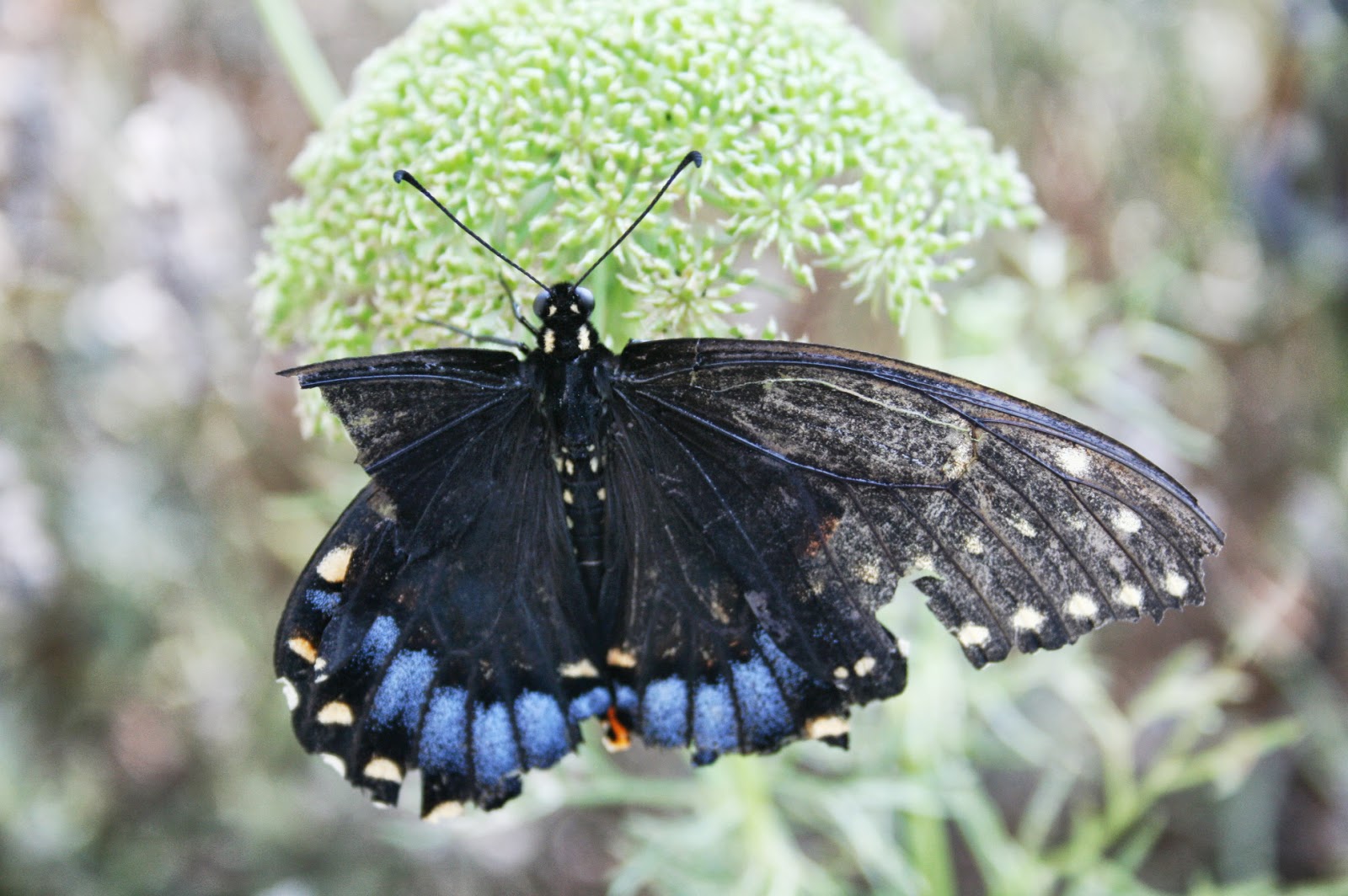
On my Facebook group page Milk the Weed, I shared a story yesterday of a black swallowtail female, battered and nearly wingless, who was flapping all over the ground. I lifted her to some fennel and got a few eggs out of her before she became exhausted. I thanked her, told her I'd look after her eggs. I was honored. 


And here are gratuitous pics of a bumblebee on wild senna and my garden. :)


Wednesday, August 7, 2013

Dream Talking Out Loud

Last week my wife and I visited an acreage for sale that's 20 minutes west of Lincoln. It's 80 acres of rolling land, with two tree stands, some CRP restored prairie, some hay, some corn. I'm not saying I want to move there -- the massive power lines are a health concern and eyesore -- but I'm trying to imagine myself living in such a space. And if I imagine, perhaps the reality of it is that much closer.

I liked the land because of the CRP, because it has differing terrain, because it adjoins a wildlife management area and small lake. It felt private. In a lot of ways it's perfect. In a lot of ways it isn't -- like the half million dollar price tag with no structures; that's what you get for being close to a larger city in prime farming country.

My thinking has always been to have multiple incomes: our prairie plant nursery would be open on long weekends during the spring and summer, and the plants I grow would be winter sown in a hoop house, not coddled in a heated nursery. But it takes time to build stock in such a way. And I don't have a horticulture or business degree -- I have three English degrees. At least I've done some marketing in my life and know how to spell.

I imagine an enclosed learning space for workshops and presentations, perhaps it could be picturesque enough to host weddings inside, or host that outside in the open or under some sort of shelter. I imagine two artists residencies that are 300 square feet, have a kitchen and bath, are completely off grid. They'd be further out into the acreage to provide solitude and serenity for a two week period. We'd drive residents into town for supplies (or provide them before arrival), and let artists raid our vegetable garden.

I'd still be doing garden consulting -- hopefully more than I am now, since folks apparently stop thinking about plants after July 1. Ideally I could teach English classes at a nearby college to tide us over in the winter months.

I'd like our home and buildings to all be off the grid, or at least 50% so. We'd harvest rainwater, use grey water outside. We'd host prairie walking tours, educational events, immersion programs for kids and adults but with some sort of unique twist. Maybe we'd sell plants at farmer's markets and other events.

Where does one do this? Where are tax laws favorable? Where are incentives for renewable energy best? Where is a community that would be open and supportive of these business ideas? Where is there affordable land, with part of it preferably already in CRP? How does one raise capital without the weight of loans and mortgages?

And then I wonder about my mental health. I've long wanted to "be out there," away from suburbia, in a place I can wander and explore at will. I need copious amounts of solitude and silence to remain even moderately balanced and healthy. I crave diversity in what I put my hands to (as does my wife). Would I turn into a mountain man and vanish? Would I feel more centered and grounded? Would I feel lost? Would I feel whole?

Could the acreage have a writing shed for me? Could I write books that would mean something? Sell? Provide another source of income, from royalties and readings and conferences?

I know a few things -- if I had the money I'd move today (no brainer); if I don't do this, I might regret it my whole life; if I do it, and go bankrupt, I'll regret that, too. Anyone out there have experience with this sort of thing? Any specific or philosophical advice for a guy in his late thirties?

I feel like folks think I'm crazy when I talk like this -- they immediately come up with reasons not to do any of these things. It's all so big and dream-riddled. But isn't that what cool people do? Muir. Leopold. Carson. Thoreau. So many more. 

Sunday, August 4, 2013

Prairie Rescue

Last week I was invited to a surprising space in the country club area of Lincoln, a typical older home on a small lot. As one would expect in this portion of town, each home nestled among mature tree-lined streets has perfectly manicured landscapes full of lush green lawn. Certainly picturesque, and certainly high maintenance and of less value to wildlife.

When I stepped around back of a home on 30th street, made my way around the secluded sidewalk hugging a detached garage, I was amazed at the backyard. A sunny expanse of around 1,500' filled with blooming prairie flowers.


You don't often see this sort of thing. So alive, so colorful, so lush -- more of a perfect pairing with the architecture of the home than the lawn next door. Insects were literally dancing on the horizon of petals. The coneflowers were certainly going bananas. And milkweed! Everywhere! God save the fledgling monarch butterfly! This space is at least five years old, and you can see how happy it is, established and doing its prairie thing well (though the flowers have shaded out the few shortgrasses I saw).

I was invited here by the landscaper hired to tidy up and prepare the space so the house could be put up for sale, but the homeowner is inclined to mow it down, spray it, and sod over this wildlife mecca. With dwindling populations of monarch butterflies, and other pollinating insects that give us 70% of our food, I can't imagine this space being anything other than a literal oasis. And no lawn means no mowing or fertilizing or wasting water.


Yes, it needs some tlc. A pathway through the flowers would give it some structure; a mulched or paved seating area / patio near the back door (instead of a formal iris bed) would make it a welcoming outdoor space to sit in and absorb the atmosphere; and on the west side behind the garage underneath tall trees is an opportunity for a shade or meditation garden with sculpture or a water feature. But all those things would be pointless without the mini meadow.


I saw wild quinine. I never see wild quinine in home landscapes. My prairie nerd radar was beeping like crazy. These plants filter groundwater, improve soil fertility, are adapted to the boom / bust cycles of Nebraska drought, bring in tons of wildlife, and need attention only in early spring when they should be cut down or burned. If you know of anyone interested in a home with some good prairie landscape bones, I can hook you up -- the place is alive and thriving.

Thursday, August 1, 2013

Musings

I've been in a musing mood this week on my personal Facebook page, and thought, hey, I'll share them here -- because sometimes leftovers taste better when they have a day or two to soak in the fridge.


Tell me, is there anything more wonderful than walking the garden path as bees, wasps, moths, and butterflies travel parallel alongside? They are like close friends keeping you company in the silent cacophony of a morning meandering. Wake the world. Break into blossom.

Watching bumblebees on the sunflowers out my office window. Their flights from bloom to bloom are erratic to me, yet I know they are simply feeling their way to the next flower -- ultraviolet light on petals, oppositely charged pollen. And just as I was typing this a goldfinch landed on a bud and began stabbing at something (eating ants?). A black-capped chickadee also landed and the two birds flapped and screamed at each other a few moments until the chickadee retreated. The finch soon flew off to another sunflower, then toward the garden, allowing the chickadee to come back. Plant sunflowers by your windows!

Cicadas remind me of August 1995 when I was scared out of my mind arriving for college in Indiana. It was so hot and my dorm had no a/c. I spent hours outside alone on a bench or drove to a park, and the cicadas pierced their echo into my heart while I cried, longing to be home again. I feel that anxiety today as I hear the cicadas in Nebraska, but I also feel the hope and excitement of later years, of growing up and becoming myself -- which must be the most frightening thing any of us can do. I can't wait to meet my college freshman in a month and help them (and push them to the place / people they will become).

It's that time of year when one has to be careful walking the garden; invisible threads of spider anchor lines cross in the least expected places. How do they drape these webs seemingly out in the middle of nowhere? Their silk is many times stronger than kevlar, holds droplets of dew that sparkle like flat chandeliers, then tear apart as the morning winds strengthen. Hunger. Purpose. Design. Loss. Repeat. Everything that we are a spider was long before.